
Last updated November 22, 2026
 Sweep & inspection
 Caps & crowns
 Flue relining
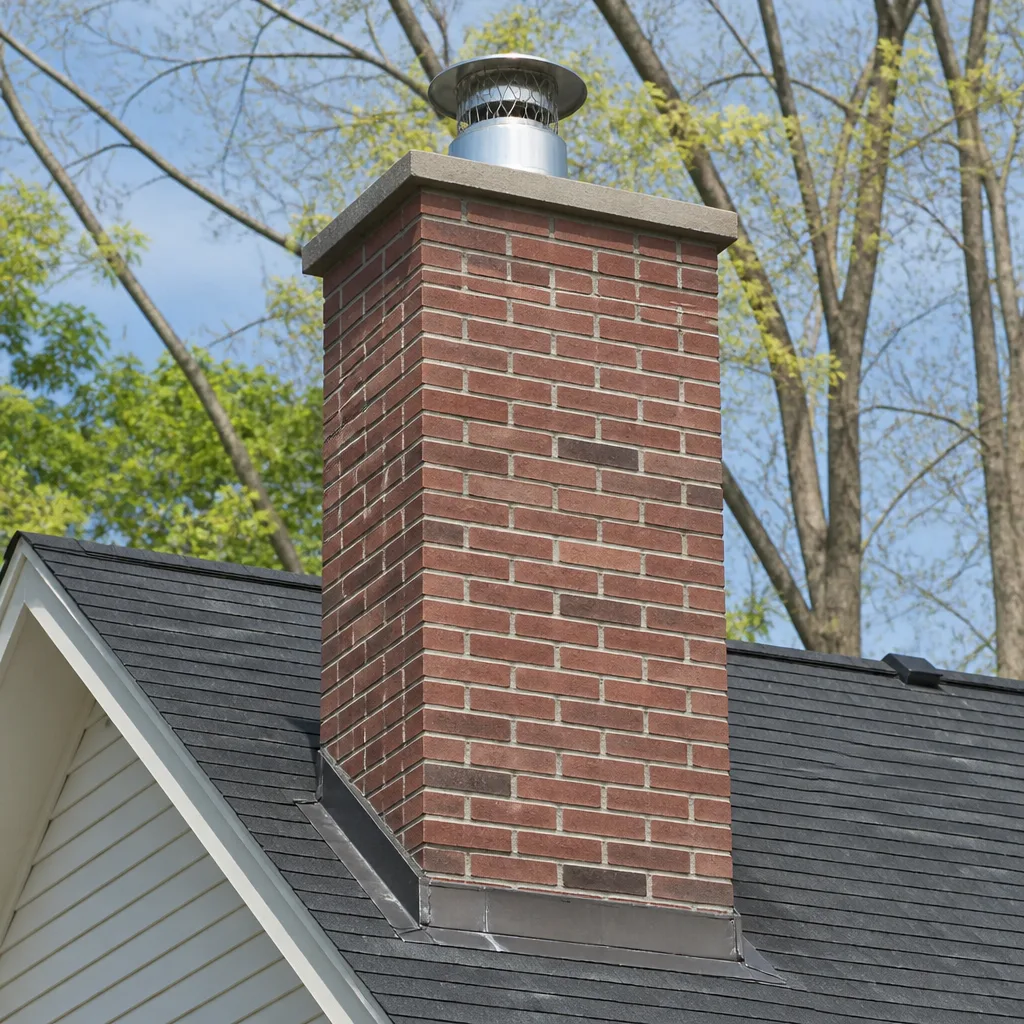 Masonry repair
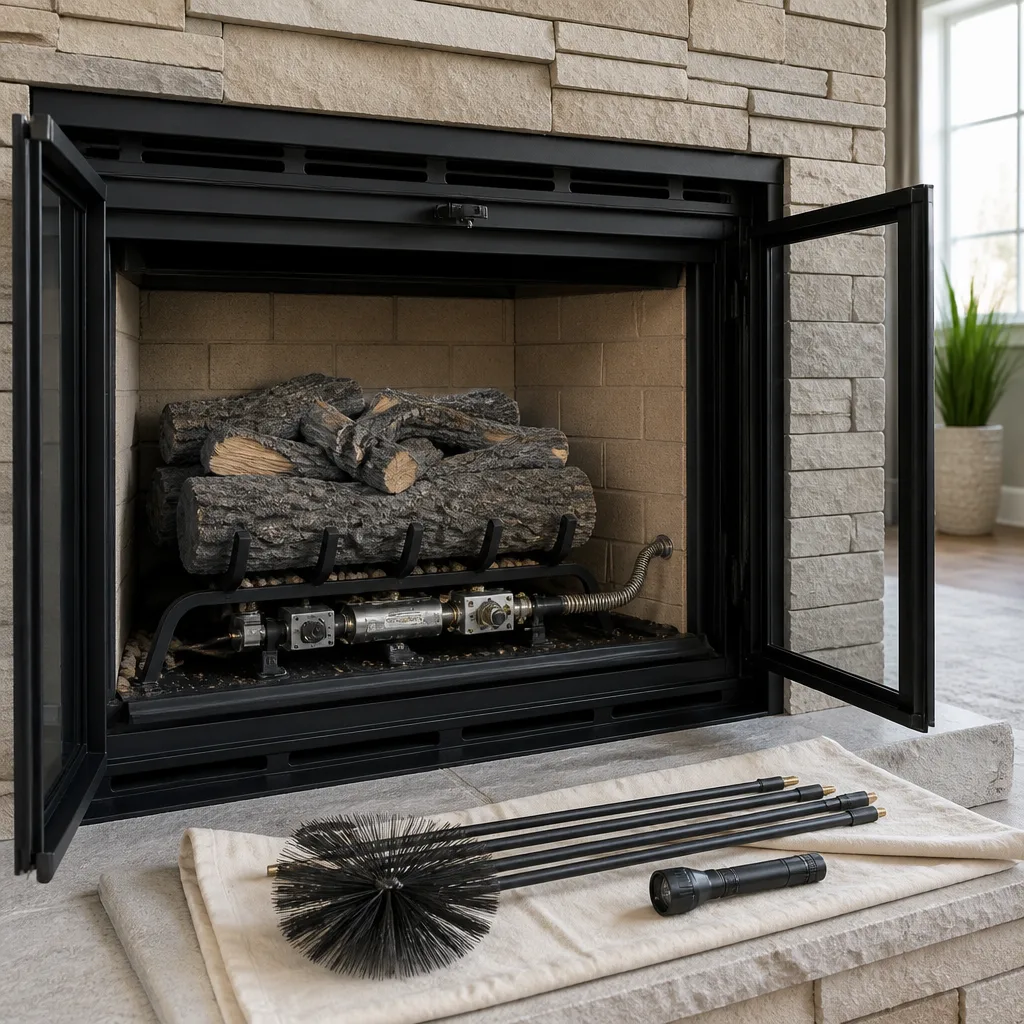 Gas fireplace service
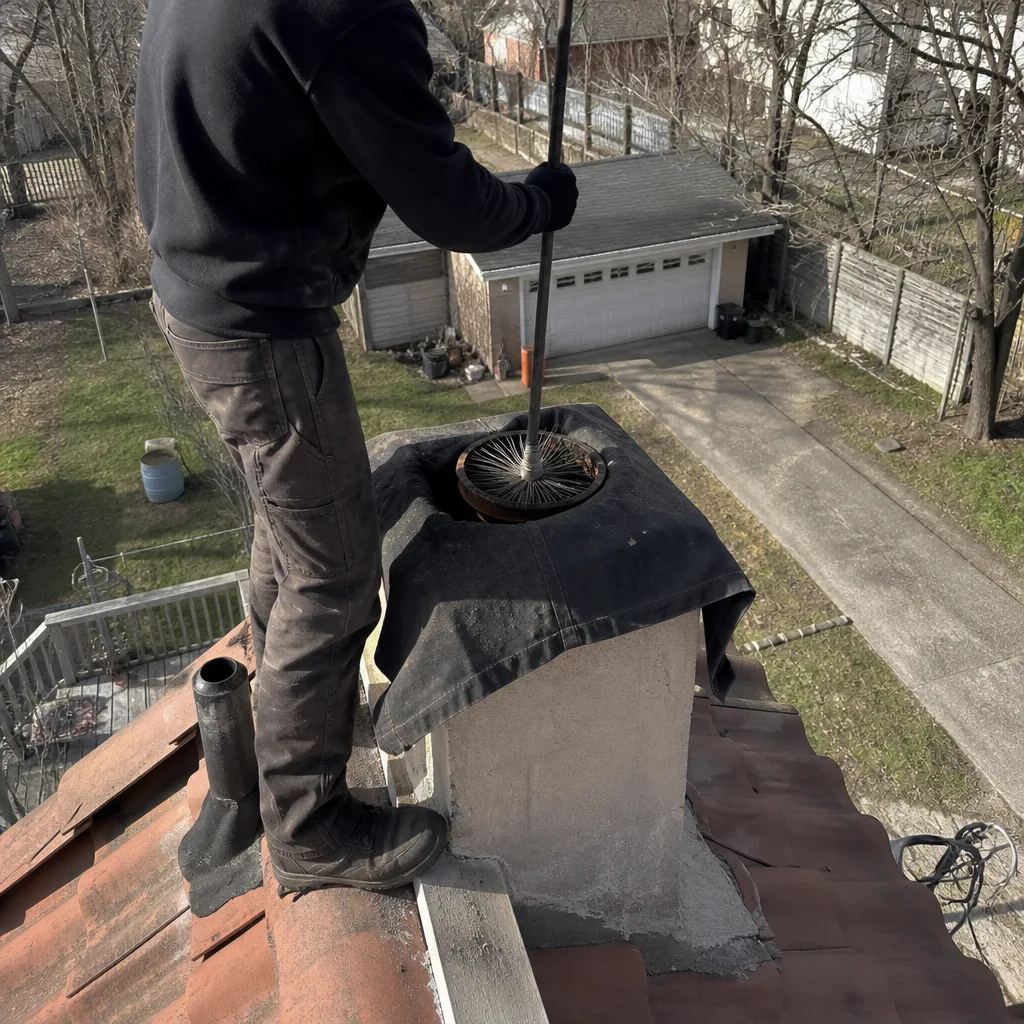
Level 1 sweep and inspection to the NFPA 211 annual standard - flue, crown, cap, and flashing checked and photographed
Chimney sweep logs do not sweep chimneys. They loosen some creosote - which then falls where a brush and vacuum still have to collect it.
Chimney Cleaning Warning Signs: A Tacony Homeowner’s Reference Guide
White staining on your chimney’s exterior brick isn’t cosmetic. It’s efflorescence, the visible evidence that water is already moving through your masonry and depositing dissolved salts as it evaporates, which means freeze-thaw damage has already started. That distinction matters because most Tacony homeowners wait for smoke to back up into the room before they call anyone, and by then the problem has moved from a cleaning issue to a structural one. This guide works differently than a symptom checklist. Each warning sign here is explained by what system is failing and why, so when you pick up the phone you can describe a system, not a hunch. It’s written for households running an active wood-burning or gas fireplace, and for anyone facing a specific repair who needs a specialist rather than a generalist.
Quick Answer
The most reliable chimney cleaning warning signs are efflorescence staining on exterior brick, a crown with visible cracks or flaking, crumbling mortar joints, creosote that smells sharp in warm weather, and smoke behavior that changes from season to season. Any one of these means the system needs evaluation before the next burn season. Two or more together, or any sign of glazed deposits and a warped damper, point to a problem that routine sweeping alone won’t solve.
Styles & brands we work with
- Sweep & inspection
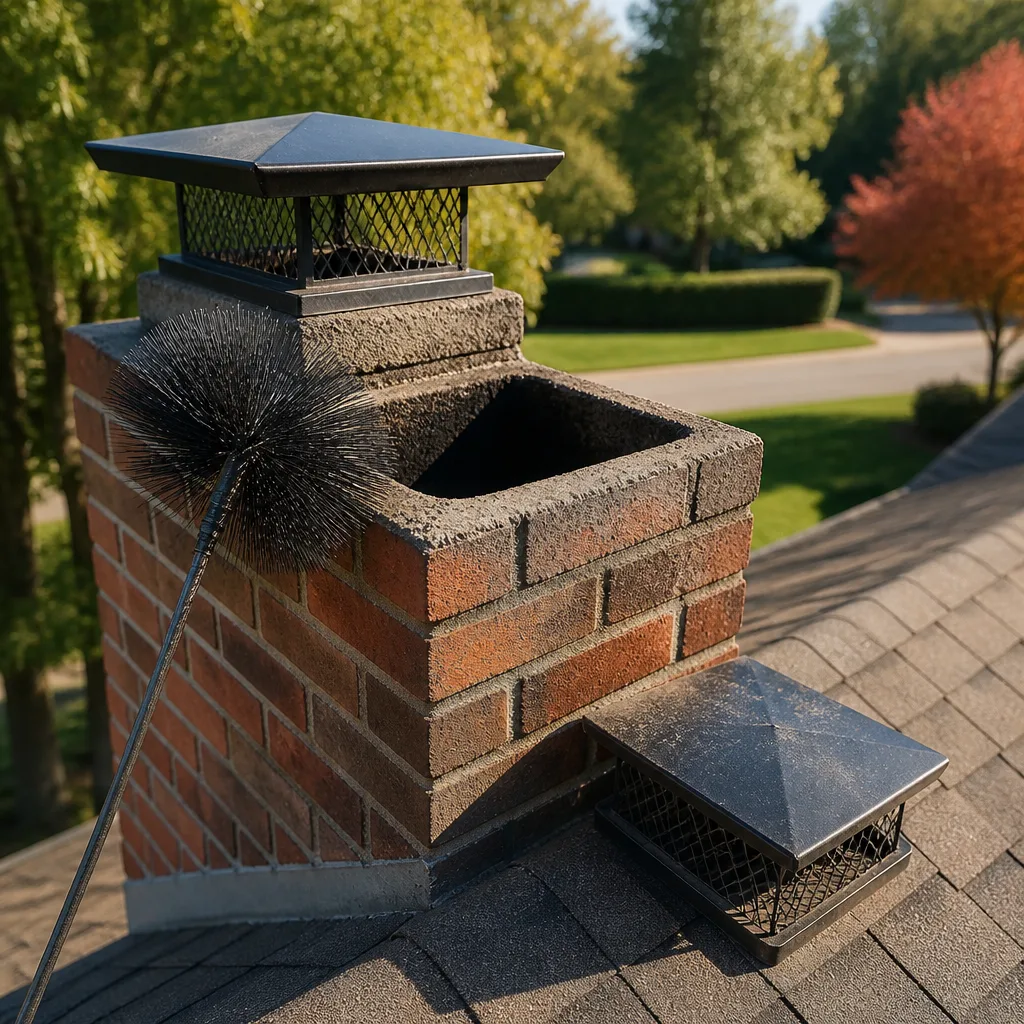
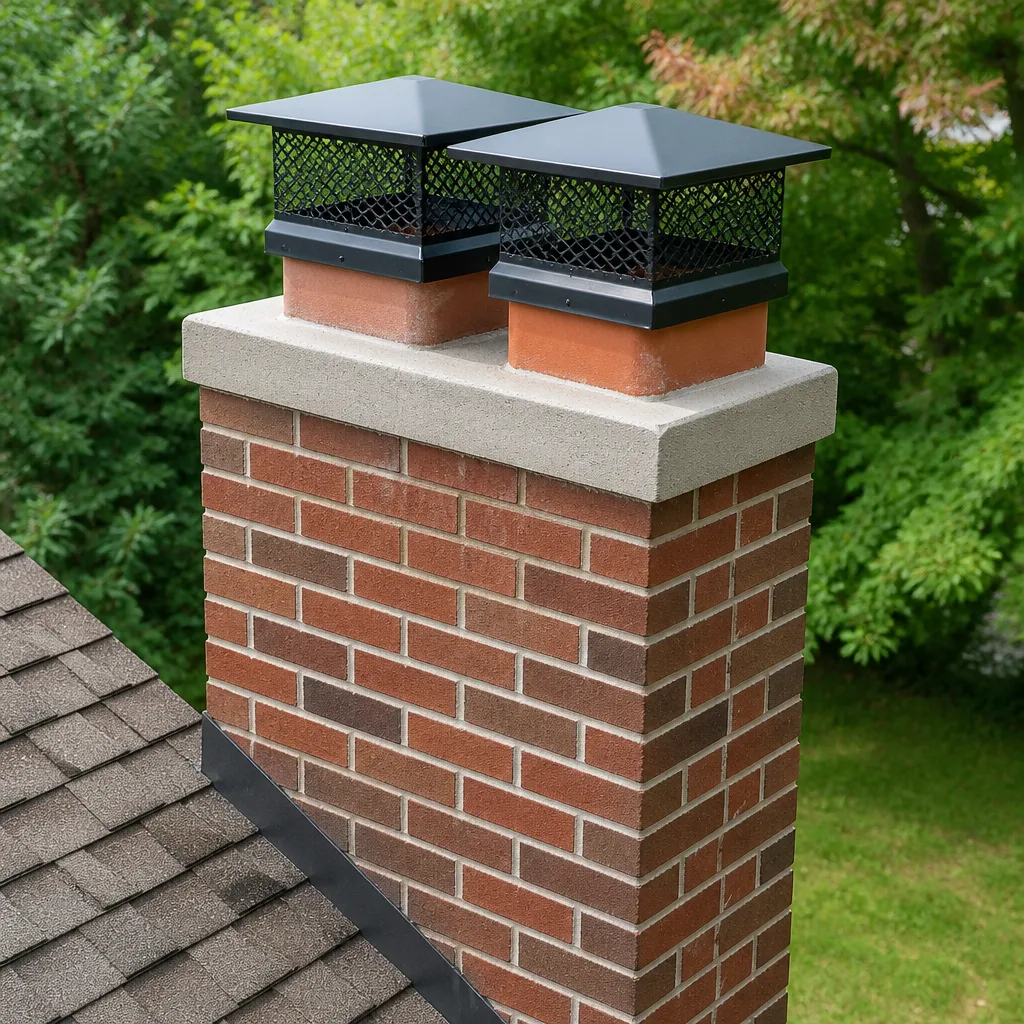
- Caps & crowns
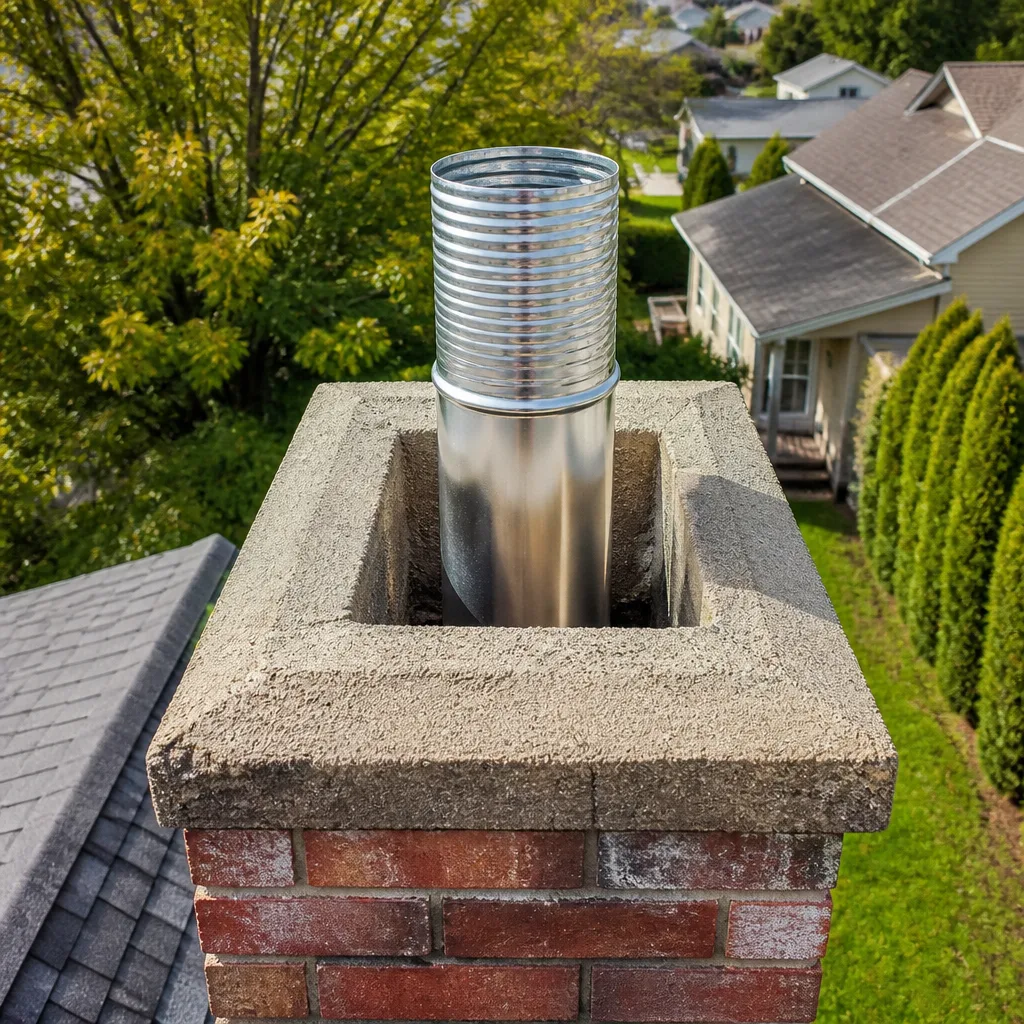
- Flue relining
- Masonry repair
- Gas fireplace service
Table of Contents
- What Are the Seven Exterior Warning Signs You Can See From the Ground?
- What Do Firebox and Damper Warning Signs Tell You?
- Draft Problem or House Pressure Problem: How Do You Tell the Difference?
- How Do You Identify Stage 2 and Stage 3 Creosote Without Inspecting the Flue?
- What Signs Mean a Chimney Fire Has Already Happened?
- How Do You Describe the Problem Precisely When You Call?
- What Should You Check Before the Heating Season Starts?
What Are the Seven Exterior Warning Signs You Can See From the Ground?
You don’t need a ladder to read most of what your chimney is telling you. Stand back on the sidewalk or in the yard and look at the stack the way you’d look at a roofline after a storm. These seven observations cover the majority of structural complaints we get asked about in Tacony. Each one maps to a specific failure, which is the point.
- White or gray staining on the brick. This is efflorescence, and it means water is passing through the masonry and leaving salt deposits as it dries. The water got in somewhere, and freeze-thaw cycles in a Philadelphia winter will widen any crack it found.
- Cracks or flaking on the crown. The crown is the concrete cap at the very top that sheds water away from the stack. Hairline cracks become spalls, spalls become a crown that no longer drains, and water starts working down into the flue.
- Crumbling or recessed mortar joints. When the mortar between bricks starts to recede, the brickwork is losing its bond. This is a structural repair issue, not a cleaning one.
- Tilted or missing chimney cap. A cap keeps rain, birds and animals out of an open flue. One that’s loose or gone means water is entering directly.
- Rusted or damaged flashing. The metal where the chimney meets the roof is a common leak point. Curling edges or gaps let water run behind the stack.
- Spalling brick faces. Brick that pops or peels off in flakes has absorbed water and is failing from the inside out.
- Green growth or dark organic staining. Moss and algae on a stack suggest it stays wet long after rain, which points back to a drainage or crown problem.
Any of these warrants a proper look at your chimney cap & crown. Water is the most common structural enemy of a masonry chimney in this climate, and every one of these seven signs is a water story.
What Do Firebox and Damper Warning Signs Tell You?
The inside of the fireplace tells you about the parts that take direct heat. Refractory panels, the firebox liner, the damper plate and the smoke chamber all live in a high-temperature environment, and each fails in its own recognizable way. Knowing which component is showing stress helps a sweep diagnose the system rather than just clean the flue.
- Spalling refractory panels. The firebox brick or refractory liner cracking and flaking means the panels have been heat-cycled past their service life. Cracked panels let heat reach the masonry behind them, and that’s where a fire can travel where it shouldn’t.
- Rust streaking on the damper plate. Rust on a damper is a water sign, not a heat sign. It usually points to moisture coming down the flue from a failed cap, a bad crown or a missing rain cover.
- A damper that won’t open fully or seat properly. A warped or stiff damper changes how the fireplace drafts and can leave you burning with the flue partly closed.
- Crumbling mortar inside the firebox. Recessed joints in the firebox suggest the heat has worked the masonry loose and the firebox needs repointing or rebuilding.
- Loose or missing damper components. A damper that rattles or a missing pivot pin means the assembly is failing, which affects both control and safety.
Firebox problems rarely stay in the firebox. A crack in a refractory panel can let heat and gases reach the chimney structure behind it, and that’s where a small repair becomes a structural one. If you notice any of these, the firebox is the place to start your conversation about chimney repair.
Draft Problem or House Pressure Problem: How Do You Tell the Difference?
Smoke backing into the room has two very different causes, and the fix for one is useless for the other. A dirty flue restricts flow because creosote and soot have narrowed the passage. Negative house pressure pulls air down the chimney because the house is exhausting more air than it takes in. A sweep who only cleans the flue will fix the first and leave you with the second, which is why the distinction matters before anyone climbs on the roof.
Here’s how to tell them apart in plain terms.
- When does it happen? Smoke that backs up every time you light a fire, regardless of weather, points to a restricted flue. Smoke that backs up only when the furnace, kitchen exhaust or bathroom fan runs points to house pressure.
- Does it happen in one room or the whole house? A pressure problem tends to show up when the house is tightly sealed and mechanical exhaust is running. A dirty flue shows up as a smoke problem that keeps getting worse.
- Does the fire struggle to start? A cold, dirty flue takes longer to establish draft. A pressure problem can make the fire fight the house for air even on a clean flue.
- Does it clear when you crack a window? If a nearby window relieves the smoke, you’re looking at a pressure issue.
Both scenarios are worth a professional look, and both are routine calls for a chimney sweep who inspects before cleaning. A sweep will check the flue and the firebox, and if the flue is clean and you still have a draft problem, the conversation moves to pressure, not sweeping.
How Do You Identify Stage 2 and Stage 3 Creosote Without Inspecting the Flue?
Creosote builds in three stages, and the later stages announce themselves before you ever look up the flue. Stage 1 is soot and flaky deposit that brushes away easily. Stage 2 is a shiny, hardened layer that takes real work to remove. Stage 3 is glazed, puffy and tarlike, and it’s the stage most closely tied to chimney fires because a hot ember can ignite it. You can’t see far enough up the flue from the firebox, but you can read the smell and the smoke behavior.
- Smell. Stage 1 creosote smells like a woodstove and is mostly a cold-weather smell. Stage 2 smells sharper and lingers into warm weather, especially on humid days. Stage 3 has an acrid, smoky smell that you can notice in a room with no fire burning at all.
- Smoke behavior. Stage 1 flues smoke normally. Stage 2 flues tend to smoke more heavily, produce a darker plume and take longer to draw. Stage 3 flues often show heavy rolling smoke, a strong smell even when the fire is out and a fire that seems to fight the flue for air.
- What comes down. Black flakes on the hearth or soot that settles on the damper after a fire can indicate Stage 2 deposit breaking loose.
If you notice Stage 2 or Stage 3 behavior, don’t inspect it yourself. Creosote in the upper flue can flood with air and ignite when disturbed, and a hot fire in a tarlike flue can produce a dangerously hot chimney fire. A professional inspection with a camera is the safe way to see what’s actually in there. Our technicians have up to 13 years of experience reading deposit stages and will show you the camera footage.
What Signs Mean a Chimney Fire Has Already Happened?
A chimney fire doesn’t always announce itself with roaring and flames out the top. Many fires in Tacony chimneys are quiet incidents that burn hot and go out, leaving behind damage that looks like ordinary aging. That’s why a routine inspection sometimes finds evidence of a fire the homeowner never knew occurred. These are the signs a sweep looks for.
- Glazed, puffy creosote. Stage 3 deposit, especially a glassy or bubbly appearance, is strong evidence of a hot burn. A hot fire can convert ordinary deposit into a layer that’s harder than the brick.
- A warped or discolored damper. Heat severe enough to warp a damper plate or tint it with a heat-affected color means a fire burned hotter than it should have.
- Cracked or displaced liner tiles. The flue liner takes the heat of a chimney fire directly. Hairline cracks in clay tiles, or tiles that have shifted, are a classic after-fire finding.
- Pieces of tile on the smoke shelf or firebox floor. Flakes of tile and pieces of the liner that turn up at the bottom were likely knocked loose by heat or by a fire event.
- Discolored or blistered paint on the chimney chase. Heat conducted through the chase can affect paint and siding.
- Cracked exterior masonry or a loosened crown. Heat expands and contracts the structure, and a fire event can open cracks that were there but had not yet shown.
Any of these findings should lead straight to an inspection of the liner. If the clay tiles are cracked, the liner has lost its ability to contain heat and gases, and that’s the point where relining enters the conversation. In our experience, a HeatShield liner resurfacing can be the right option when damage is limited, and full liner replacement is the right call when it isn’t. We explore every option before recommending replacement.
How Do You Describe the Problem Precisely When You Call?
The most useful thing you can do before you call is match your observation to a system. A sweep can work faster and give you a better sense of the job when you can say “the crown is cracked and there’s white staining on the south face” instead of “something’s wrong with the chimney.” Here’s a simple way to structure it.
- Name the location. Exterior brick, crown, firebox, damper or smoke shelf. Where you saw it narrows the diagnosis.
- Describe what you see. White staining, cracking, flaking, rust, glazing, a loose cap or a damper that won’t close.
- Say when it happens. Every fire, only on cold days, only when a fan runs, or after the fire is out.
- Note the smell. Normal woodsmoke, sharp and lingering, or acrid and present with no fire burning.
- Mention what changed. Heavy smoke, a fire that’s harder to start, soot on the hearth or paint blistering on the chase.
That five-part description is enough for a sweep to plan the visit and tell you whether it’s likely a cleaning, a repair or an inspection. If you’re not sure which category your observations fall into, say so. Most Tacony homeowners we talk to aren’t chimney people, and the goal isn’t for you to diagnose it. It’s for you to hand us enough to plan the visit.
What Should You Check Before the Heating Season Starts?
A chimney sweep is safest and most useful before burning season starts, not after the first scares. In the Philadelphia climate, that means late summer and early fall. A sweep booked now catches crown and cap problems while the weather still lets repairs be made, and it catches deposit buildup while you still have time to deal with it. The urgency here is seasonal, not hourly.
- Book the sweep before you light the first fire. A clean flue starts the season with less deposit and less risk of an overheating event.
- Look at the crown and cap from the ground. Cracks, missing caps and curled flashing are easier to spot on a clear day than in the middle of winter.
- Check the damper operation. Open and close it fully a few times before the burn season so you catch stiffness early.
- Look for efflorescence and staining. White stains that appeared over the summer are a sign water got in while the chimney wasn’t in use.
- Note any smell in the room with no fire. A sharp creosote smell in warm weather is a Stage 2 or Stage 3 deposit cue.
- Check the firebox for spalling panels and rust. Both are indoor signs that a repair may be needed before you burn.
For a full run-through of what a sweep does and what to expect on the visit, see our Chimney Sweep Tacony page. Our technicians have up to 13 years of experience with sweep, cap and crown, liner installation and rebuild, structural repair and fireplace repair, which means one specialist handles the job from top to firebox.
Common Mistakes to Avoid
- Treating efflorescence as a cleaning problem. White staining means water is moving through the masonry. Scrubbing the brick hides the evidence without stopping the water that caused it.
- Calling a general handyman for a flue issue. Sweeping, liner installation and structural rebuild call for professional-grade materials and the training to install them. A generalist without chimney tools can make a small problem worse.
- Burning a hot fire to “clean out” the flue. A hot fire with Stage 2 or Stage 3 creosote is how chimney fires start. The safe fix is a professional sweep, not a hot burn.
- Skipping the camera inspection. Cleaning without inspecting the flue means you don’t know what the deposit was hiding. A camera look shows the liner and the smoke chamber.
- Assuming a clean flue means a clean bill of health. The crown, cap, flashing and firebox are all part of the system, and a sweep who only cleans is missing the rest.
- Waiting until smoke is in the room. Smoke backing up is late in the cycle. Exterior staining, a cracked crown and a sharp creosote smell show up long before a draft problem becomes a house problem.
- Relying on a glass cleaner to fix a rusted damper. Rust streaks on the damper mean water is getting in from above. The fix is up top, not at the firebox.
See the difference
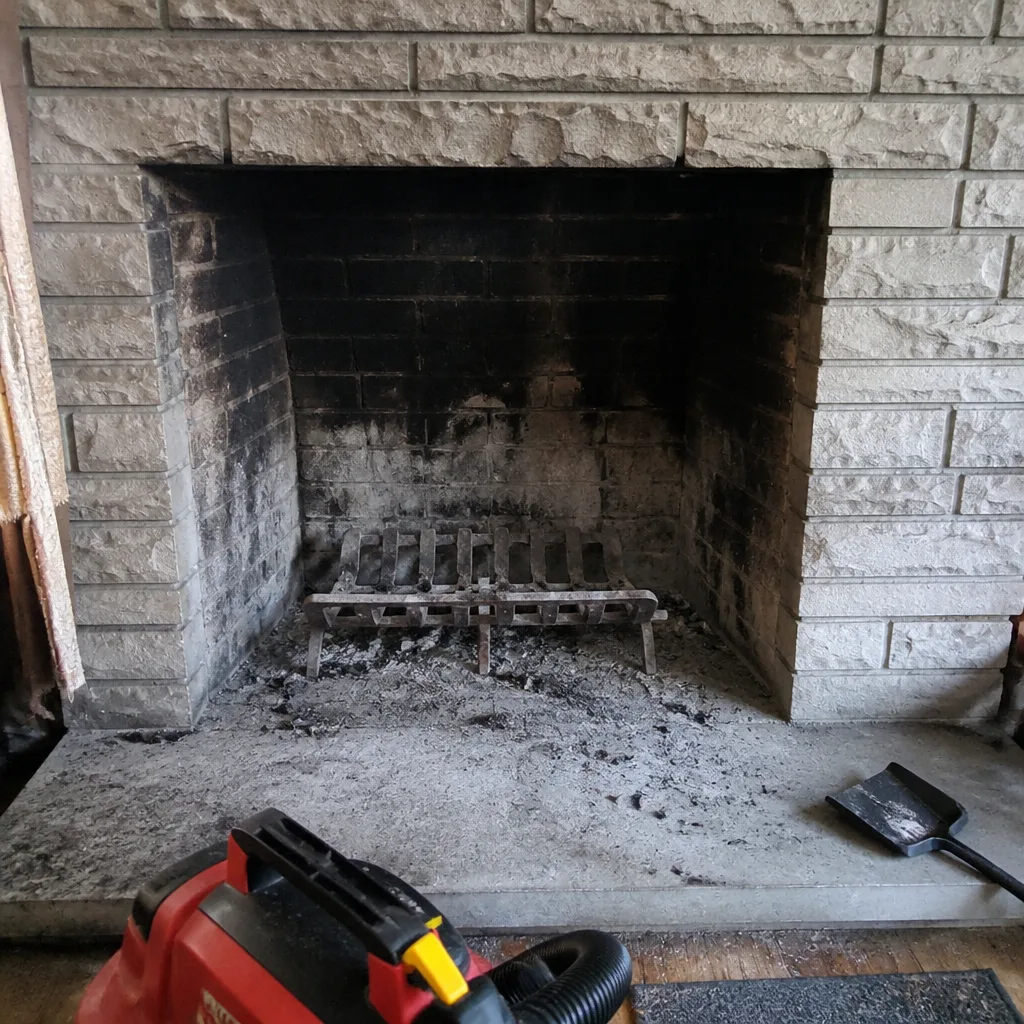 Before
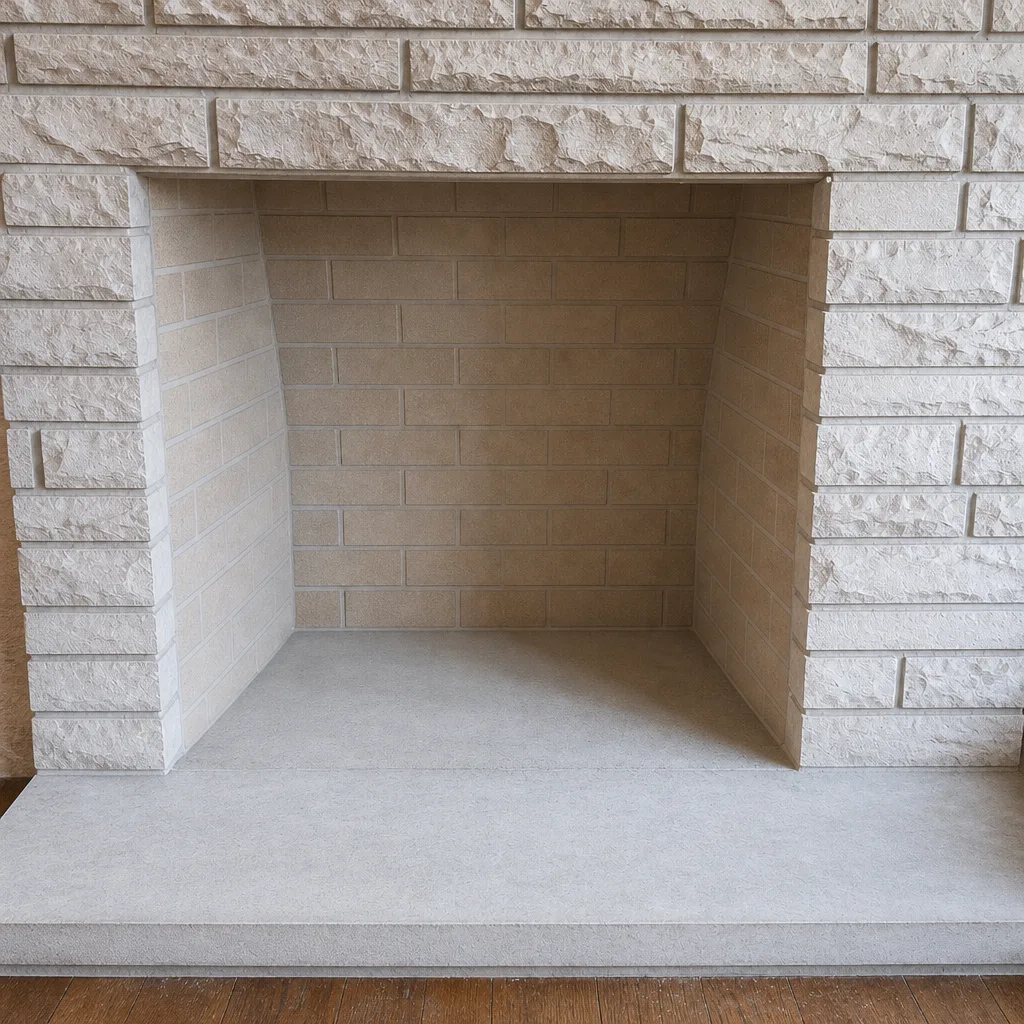 After
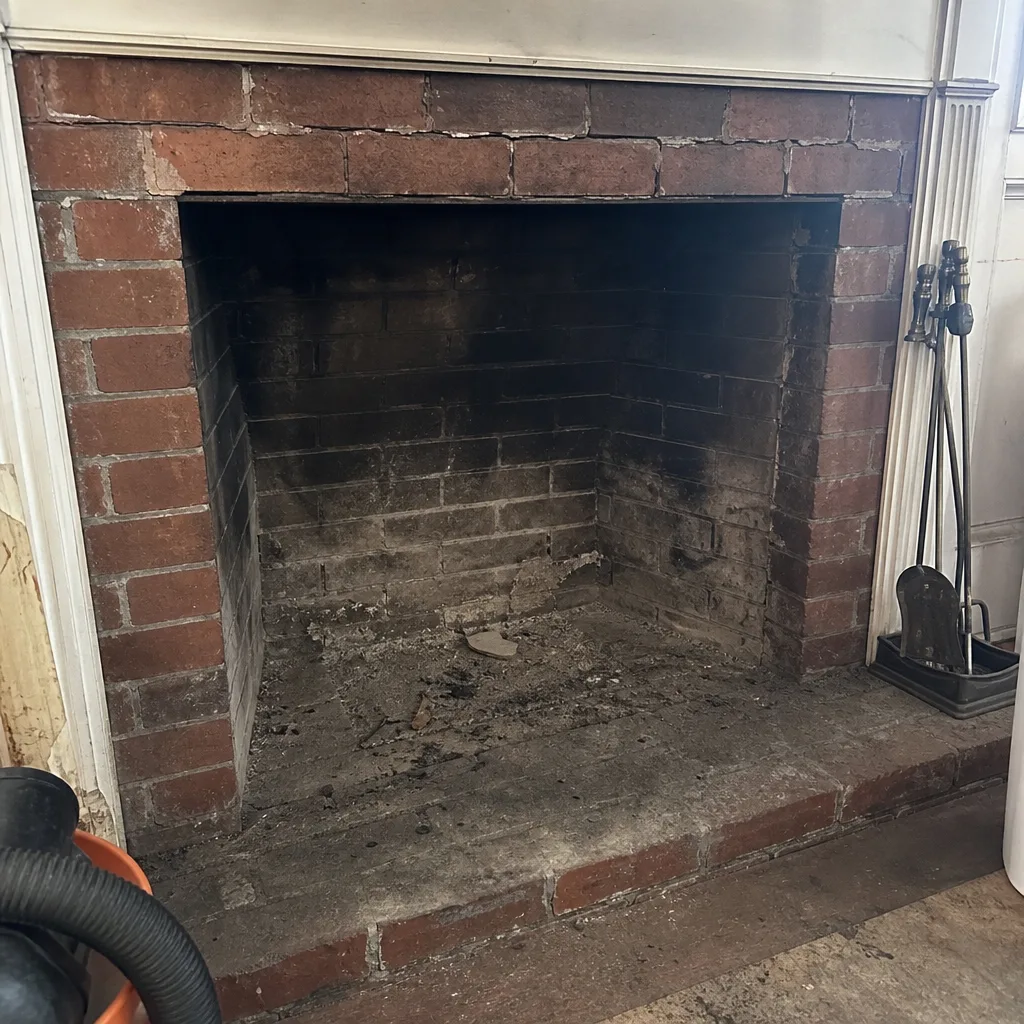 Before
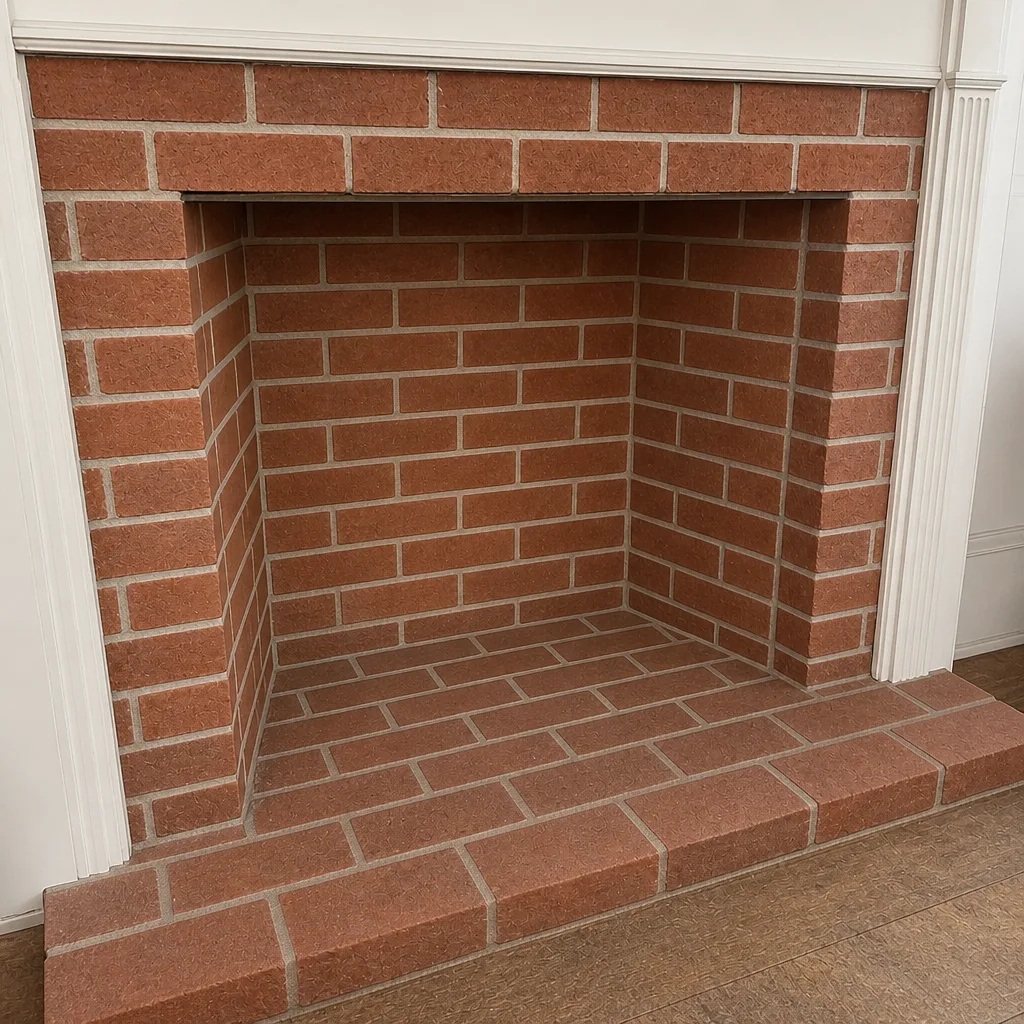 After
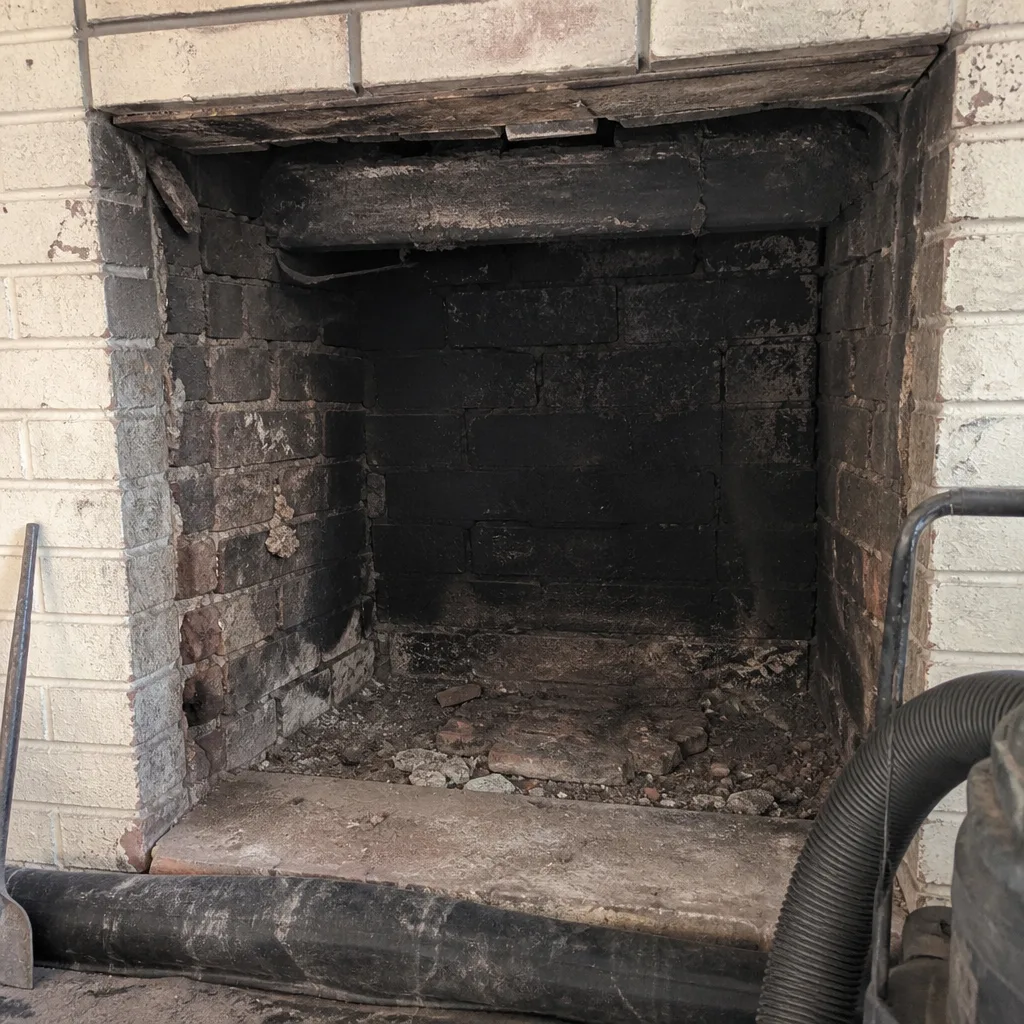 Before
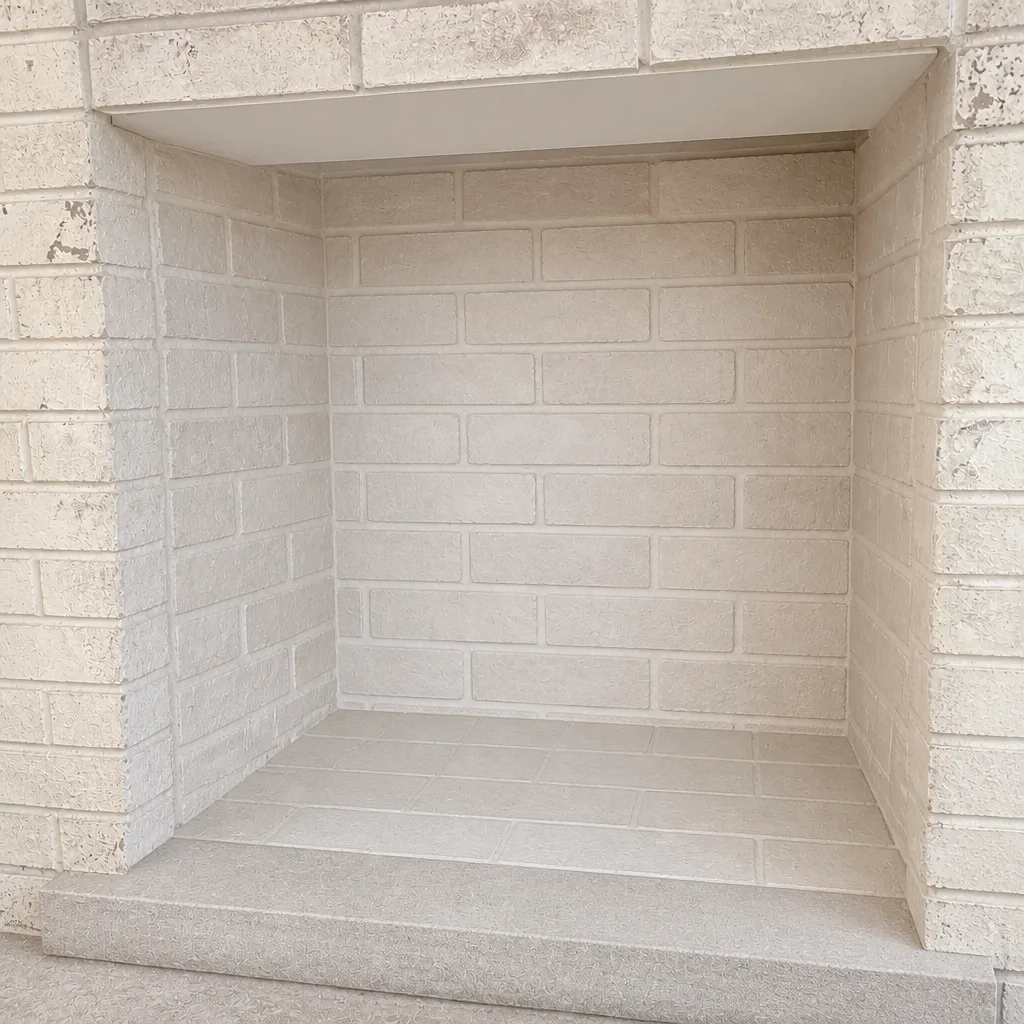 After
When to Call a Professional
Call when you see efflorescence, a cracked crown, crumbling mortar, a loose or missing cap or a spalling firebox. Call when the creosote smells sharp in warm weather or the smoke behavior changes. Call when you spot evidence that a fire has already run hot, such as glazed deposits, a warped damper or cracked liner tiles. And call before the first burn of the season, not after, because fall is when a Tacony chimney gets its real workout and a sweep booked in late summer catches water damage before it freezes. Every job starts with a flat-price sweep agreed before booking, and the camera inspection and photo report are included so you can see the evidence yourself. Chimney Sweep Tacony offers free estimates in Tacony. Call (833) 370-3312.
Frequently Asked Questions
A sharp creosote smell in warm weather and white efflorescence staining on exterior brick are usually the earliest visible signs. Both show up before smoke backs into the room, and both point to deposit buildup or water entry rather than a firebox problem. Call (833) 370-3312 for a free estimate if you see either one.
White staining is efflorescence, which means water is moving through the masonry and leaving dissolved salts behind as it evaporates. It indicates water entry, not cosmetic wear, and freeze-thaw cycles will widen whatever crack let the water in. Call (833) 370-3312 for a free estimate.
Often yes. Glazed, puffy creosote, a warped or discolored damper, cracked liner tiles and tile flakes on the smoke shelf are strong signs of a past fire event. Many fire incidents are quiet and leave evidence a camera inspection can find. Call (833) 370-3312 for a free estimate.
If smoke backs up every time you light a fire, the flue is likely restricted. If it backs up only when a fan or furnace runs, or clears when you crack a window, house pressure is likely pulling air down the flue. Both need a professional look, and the fix is different for each. Call (833) 370-3312 for a free estimate.
Stage 3 creosote has an acrid, smoky smell that can be noticeable with no fire in the firebox. Stage 2 deposit smells sharper than normal soot and lingers into warm weather. Both warrant a professional inspection rather than a hot burn. Call (833) 370-3312 for a free estimate.
Yes. Late summer and early fall are the right time to catch crown and cap problems while repairs are still easy, and to clear deposit before the burn season starts. A clean flue starts the season with less risk of an overheating event. Call (833) 370-3312 for a free estimate.
The Bottom Line
Chimney problems announce themselves before they become emergencies. White staining on the brick is water moving through masonry, not a stain to scrub. A cracked crown sends water into the flue. A sharp creosote smell in warm weather means deposit has reached a stage that a hot fire can ignite. Interior signs like rust on the damper, spalling refractory panels and a warped plate tell you which system is failing, and a sweep who diagnoses the system rather than just cleaning the flue can tell you whether the fix is a repair, a resurfacing option or a full reline. Read your chimney from the ground and the firebox, write down what you see, and call a specialist before the season, not after. Cap, crown, liner, firebox: the complete chimney, covered.
Chimney Sweep Tacony handles sweeping, cap and crown work, liner installation and rebuilds, structural repair and fireplace repair, working with professional-grade materials including DuraFlex, HeatShield, Gelco and Copperfield. From annual sweep to full liner rebuild, one specialist, one call. Call (833) 370-3312 for a free estimate. We answer 24/7. Fast dispatch from 7am to 7pm, Sunday through Friday.
Written by the team at Chimney Sweep Tacony.