
Last updated November 22, 2026
 Sweep & inspection
 Caps & crowns
 Flue relining
 Masonry repair
 Gas fireplace service
Level 1 sweep and inspection to the NFPA 211 annual standard - flue, crown, cap, and flashing checked and photographed
Chimney sweep logs do not sweep chimneys. They loosen some creosote - which then falls where a brush and vacuum still have to collect it.
Chimney Sweep Maintenance Checklist for Tacony Homeowners
Here’s the thing most Tacony homeowners get wrong about chimney care: a chimney that passed inspection five years ago can have a cracked liner, a deteriorated crown, and active spalling right now, and every one of those failures is invisible from the fireplace opening. Tacony’s freeze-thaw cycle does measurable damage every single winter. Water gets into brick pores and mortar joints on a mild afternoon, freezes solid overnight, expands, and pushes the masonry apart a little more each season. The late 19th and early 20th century brick rows that make up so much of this neighborhood were built before anyone was thinking about modern flue liners. This checklist walks you through what to look at from the outside, what to document from the inside, which tasks you can safely handle yourself, and what you should expect in writing after a sweep.
Quick Answer
A safe annual chimney routine in Tacony means four things: a professional sweep and inspection once a year before you start burning, a homeowner-level exterior walk-around each fall checking mortar joints, crown cracks, and flashing, interior documentation of staining and damper condition, and a written sign-off from your sweep showing what was cleaned and what was found. Anything involving the flue interior, the liner, or structural masonry belongs in trained hands. Our technicians have up to 13 years of experience, and the checklist below reflects what actually fails in Tacony’s brick row homes.
Styles & brands we work with
- Sweep & inspection
- Caps & crowns
- Flue relining
- Masonry repair
- Gas fireplace service
Table of Contents
- Pre-Season Exterior Checklist for Tacony Brick Chimneys
- Interior Indicators You Can Safely Document
- How to Spot Stage 1 vs. Stage 2 Creosote With a Flashlight
- What Homeowners Can Handle vs. What Requires a Sweep
- What Happens During a Professional Sweep
- The Post-Sweep Sign-Off Checklist
- Tacony Seasonal Maintenance Calendar
- When Maintenance Turns Into Repair
Pre-Season Exterior Checklist for Tacony Brick Chimneys
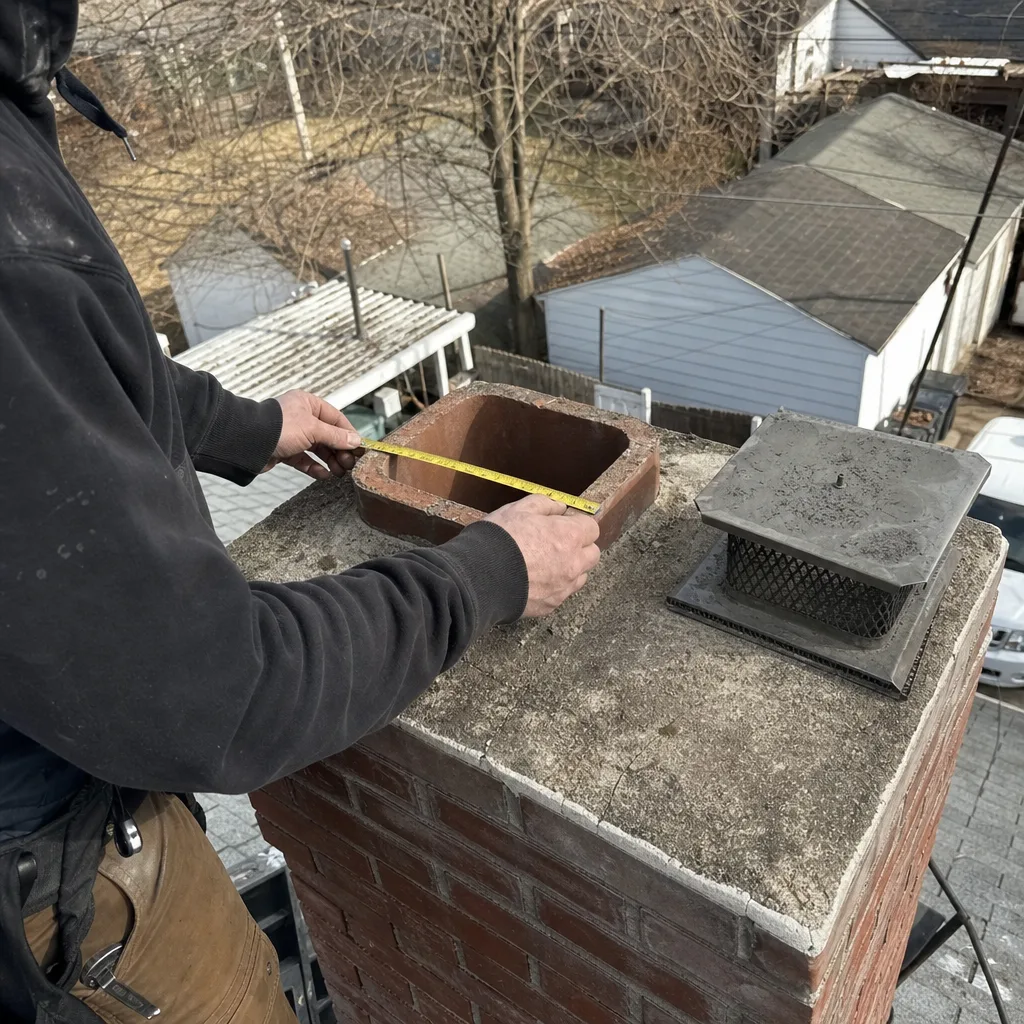
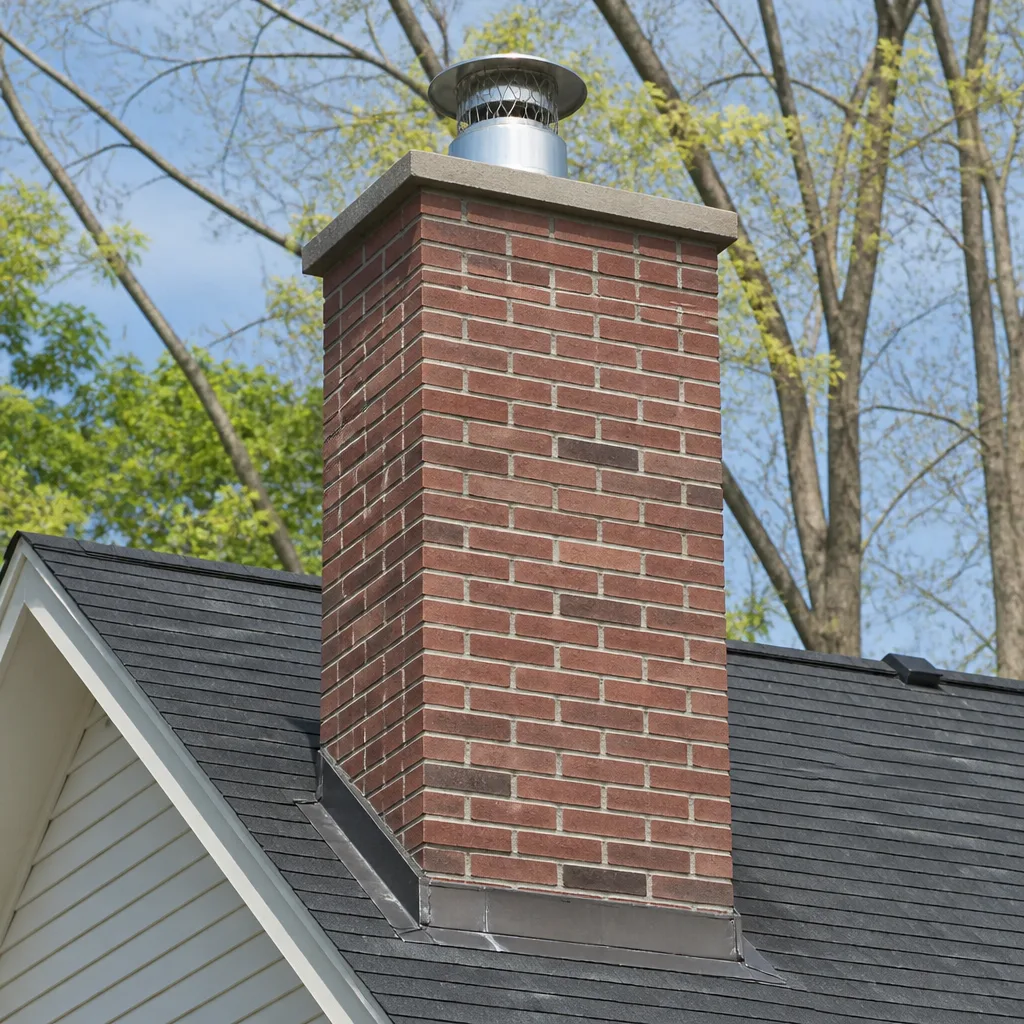
Start on the ground with binoculars. You don’t need to get on the roof to catch most of the serious problems. Look at the chimney from the street, from the sidewalk across the way, and from your own back window. The three failure points you’re hunting for are mortar joint recession, crown cracks, and flashing pull-away. Each has a distinct visual signature once you know what you’re looking at.
Mortar joint recession shows up as dark horizontal shadows between the brick courses where the mortar has eroded back from the face of the brick. Some recession is normal on a hundred-year-old Tacony chimney. But once the joint is recessed deeper than roughly the thickness of the mortar joint itself, the brick above is carrying more load than it was designed for. That’s the point where repointing stops being cosmetic and starts being structural. Look especially at the top third of the chimney stack, where wind-driven rain hits hardest.
Crown crack patterns tell you how urgent the problem is. The crown is the concrete or mortar cap on top of the stack. Hairline cracks that run with the grain are common and often stable. Cracks that run across the crown in a spiderweb, or any crack wider than a credit card edge, let water straight into the flue. On the brick rows around Tacony, an unsealed crown crack is the single most common entry point for the water that causes the damage you see lower down.
Flashing pull-away is the metal sheet where the chimney meets the roof. Look for the metal lifted off the brick, gaps at the corners, or visible rust streaks running down the masonry below. Flashing failures are one of the cheaper fixes to make and one of the more expensive ones to ignore.
Two more items go on the same walk-around:
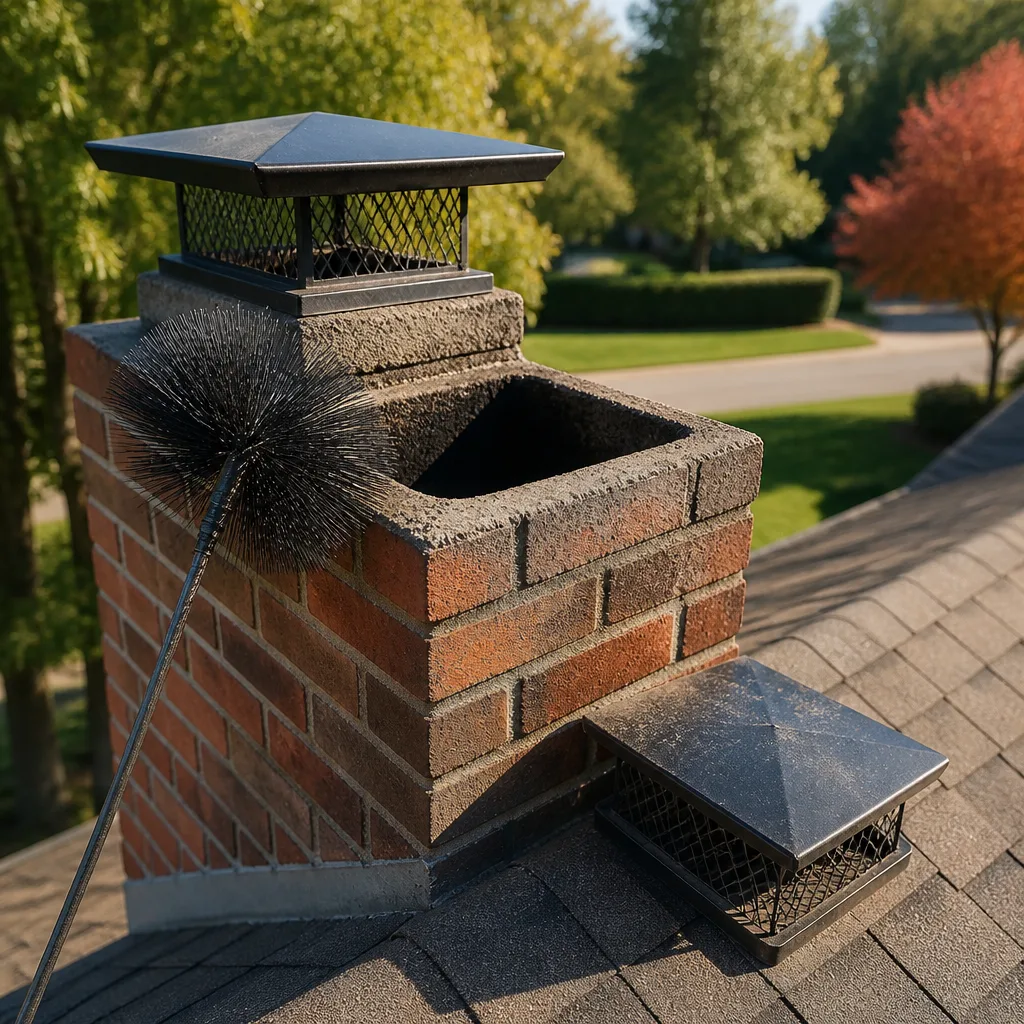
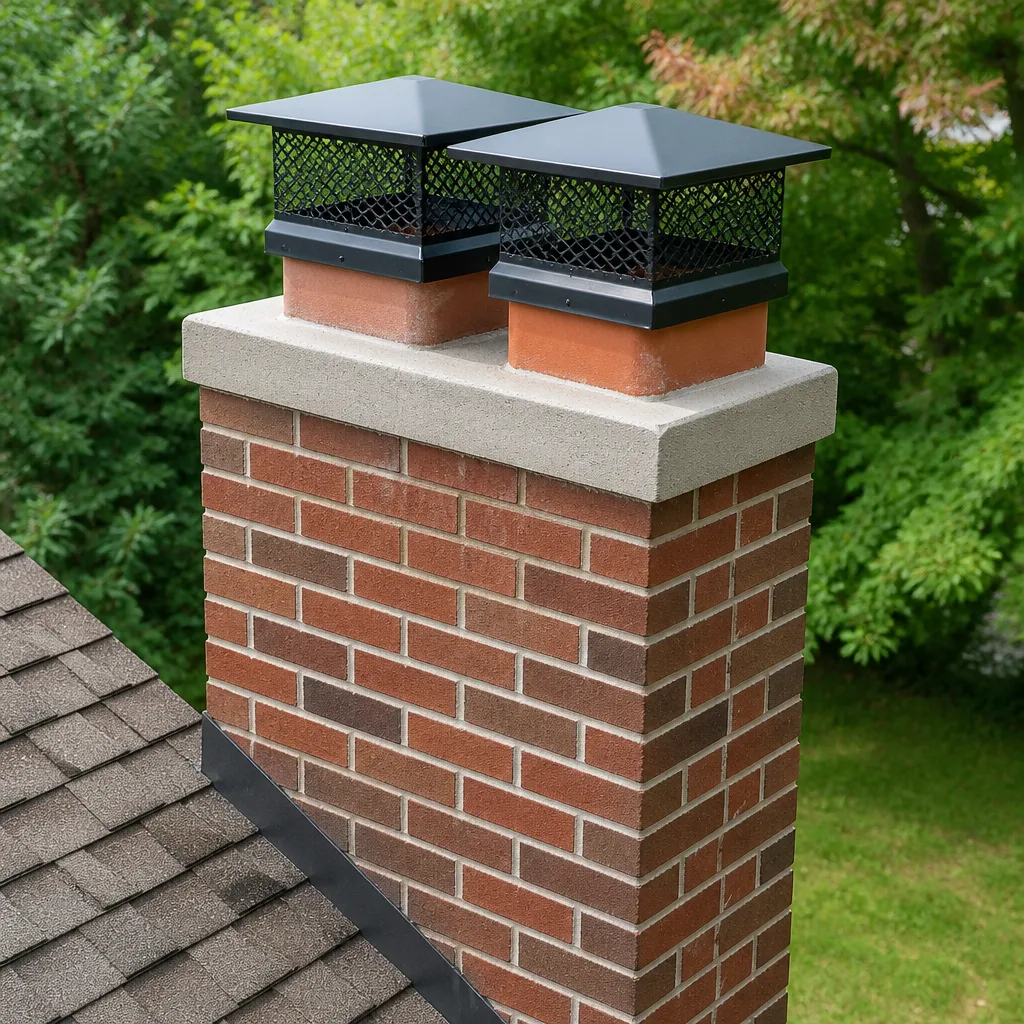
- Chimney cap condition. Is the cap still attached? Is the spark screen still intact, or has it rusted through? A missing cap lets rain, squirrels, and birds straight into the flue.
- Zinc or steel chase cover on prefab chimneys. If your Tacony home has a manufactured fireplace, check that the chase cover hasn’t rusted through along the seams.
Write down what you see and put a date on it. A dated photo from your phone is worth more to your sweep than any verbal description, because it shows progression across seasons. For the projects that come up on that walk-around, our chimney repair work covers everything from cracked crown patching to full stack rebuilds.
Interior Indicators You Can Safely Document
Inside the house, the goal is not to fix anything. It’s to document what you see before your sweep arrives so you can walk through the findings together with something to compare against. Bring a flashlight, and take photos. You’re looking at three zones: the smoke chamber inside the firebox, the damper plate, and the firebox joints themselves.
Smoke chamber staining patterns are one of the most informative things you can photograph. Light, dry soot staining at the firebox throat is normal on a wood-burning fireplace. But streaks of dark brown or black that trail up one side of the smoke chamber, or staining that shows water lines, tells a different story. Water staining usually means a leak higher up in the flue. Asymmetric staining can point to a damper plate that’s not seating square against its frame, sending smoke past the damper on one side. Both are worth photographing and mentioning when you book.
Damper plate pitting is easier to check than it sounds. Reach in with a gloved hand or a flashlight and look at the damper plate – the metal flap above the firebox. Surface rust is common and usually harmless. Deep pitting, or plates that have warped and no longer sit flush, are a different matter: a warped damper leaks heat up the flue all winter and makes the fireplace harder to control. Take a photo from below with the damper both open and closed so you can see the seating line.
Firebox joint separation is the one to take seriously. The firebox is the brick chamber where the fire sits. Those joints take more thermal cycling than any other part of the chimney. Look for gaps between the firebrick and the surrounding masonry, and for hairline cracks that run through the firebrick themselves. A visible gap or a crack you can fit a dime edge into means the firebox has walled off a layer of heat stress. That’s a job for a specialist – we handle firebox repair as part of our chimney and fireplace services. Do not run a fire in a fireplace with open firebox joints until it’s been looked at.
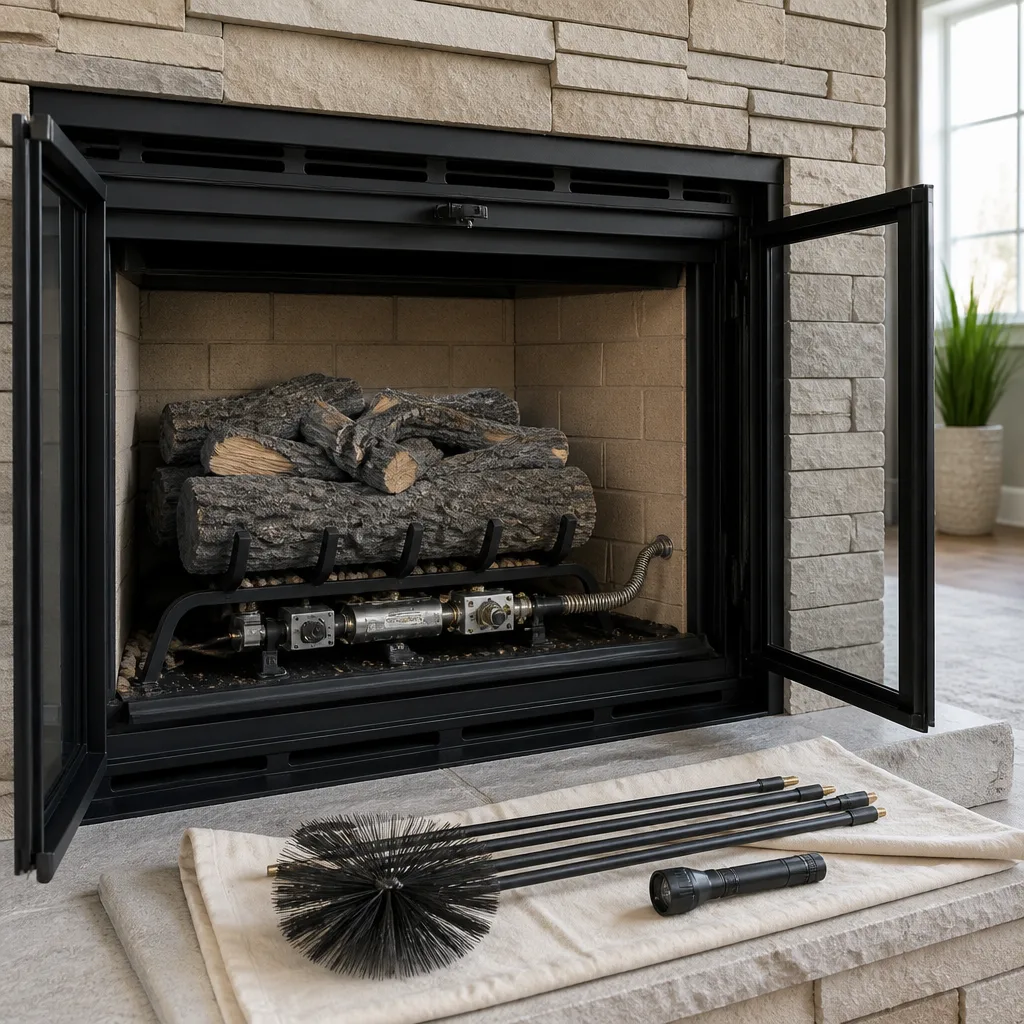
On a gas fireplace, the checklist is shorter. Look at the ceramic logs for soot or black carbon buildup, check that the glass panel isn’t cracked, and note any change in flame color or shape. Gas fireplaces still need a flue inspection, because the byproducts of combustion still go up that flue.
How to Spot Stage 1 vs. Stage 2 Creosote With a Flashlight
Creosote is the flammable residue left behind by wood smoke, and it comes in three stages. You can safely identify Stage 1 and Stage 2 with a flashlight and a mirror held at the fireplace opening. Stage 3 – the glazed, hardened crust that’s a fire hazard – is not something to poke at or try to remove yourself. The purpose of this check is not to try to remove it yourself. It’s to know what you’re dealing with so you can describe it clearly when you book.
Here’s the sequence we recommend:
- Wait until the fireplace is cold. That means no fire for at least 24 hours, and no embers glowing when you look up.
- Open the damper fully and stand in front of the fireplace opening.
- Shine a bright flashlight up the flue at a shallow angle so the beam grazes the walls.
- Hold a small mirror at the opening and angle it so you can see the upper flue walls.
- Look for the texture and color of the buildup on the flue walls.
Stage 1 creosote looks like flaky, dusty soot. It brushes off easily onto a sweep’s brush. It’s what you get from clean, hot fires on dry wood. Stage 2 creosote looks like a crusty, hardened layer of black or brown flakes that sticks to the flue and doesn’t brush off easily. It’s what you get from cooler fires, damp wood, or restricted air supply. Stage 3 creosote is a shiny, glazed, tar-like coating that has essentially baked onto the flue wall. It can ignite, and it’s what causes most chimney fires. If your flashlight shows a glazed, reflective surface up the flue, book a sweep before you burn again.
You can also check the flue from out on the roof if you’re comfortable up there and it’s dry. Looking down the flue with a flashlight from the chimney top gives you a clearer view of the upper walls than the mirror trick from below. If the roof pitch or the height makes that a bad idea, skip it. The mirror check from the fireplace is enough to tell you when to call.
One more creosote signal that doesn’t require any tools at all: if your fires have started smoking back into the room more than they used to, or if the fireplace feels like it’s drawing poorly, restricted flue cross-section from creosote buildup is one likely cause. That’s the point where a professional chimney sweep and inspection is past due.
What Homeowners Can Handle vs. What Requires a Sweep
The line between homeowner maintenance and professional work follows one rule: if the task means reaching into the flue or climbing onto the roof, it’s a professional job. Everything on the accessible side of the firebox and on the ground is fair game for a homeowner who’s willing to pay attention.
Safe homeowner tasks:
- Cap debris clearing. From the ground with a pole, or from inside the firebox looking up, you can usually see leaves, twigs, or bird nests jammed against the cap screen. Clear what you can safely reach. Never put your hand up the flue.
- Damper lubrication. A puff of high-temperature dry graphite lubricant on the damper hinges and track is a reasonable homeowner job. It quiets the damper and keeps it moving freely.
- Firebox ash removal. Keep the ash bed down to a reasonable depth, and clean out the firebox periodically.
- Cap visual inspection. Binoculars from the yard, every fall, checking that the cap is still attached and the screen is intact.
- Photo documentation. Take dated photos of everything you check. Your sweep will use them.
Tasks that require a trained sweep:
- Any brush work inside the flue. The flue cross-section and liner condition have to be understood before a brush goes up, or you risk damaging an already-cracked clay tile liner.
- Roof-level inspection of the crown, flashing, and cap attachment.
- Creosote removal beyond Stage 1.
- Any look at the liner itself. A cracked clay tile liner can allow heat and gases into the surrounding structure, and it can’t be evaluated from the firebox opening.
- Firebox joint repair, damper replacement, and any masonry work.
The safety reason behind this line is straightforward. A clay tile liner that’s cracked through can let a chimney fire reach the wood framing of a Tacony row home’s roof structure in a way that a fire confined to the flue cannot. That’s also why we install protective systems like a chimney cap & crown properly sealed rather than just covering the hole. There’s a real difference.
If you’re unsure whether a given task is safe for you to take on, ask when you book the sweep. A quick description over the phone is usually enough to sort it out.
What Happens During a Professional Sweep
A proper sweep isn’t just a brush on a rod. When we show up for an annual cleaning, the visit follows a specific order, and knowing what to expect helps you ask the right questions on the day.
- Drop cloth and containment. The firebox opening gets sealed with a slip cover and the floor gets covered. We don’t want soot in your living room any more than you do.
- Pre-sweep interior inspection. Before any brush goes up, the firebox, smoke chamber, damper, and firebox joints get a look with a flashlight.
- Flue inspection. We look up the flue with a camera or direct view to assess the liner condition before deciding how to sweep it.
- The sweep itself. Brushes sized to the flue cross-section run up from the firebox to the top, or down from the roof, depending on the configuration. The brush type depends on the creosote stage.
- Camera inspection. A camera inspection of the flue confirms what’s left after the sweep and catches things a brush can miss – hairline cracks, deteriorated mortar between tile, and any areas where the liner has separated.
- Photo report. You get photos of what we saw, in writing, so you can verify the findings yourself.
- Exterior check. While we’re there, we look at the cap, crown, and flashing from the roof.
Every sweep we book comes with a flat-price estimate agreed before the appointment, and the camera inspection and photo report are included. So you’re not paying for a sweep and then getting a surprise repair estimate on top. The report is the report.
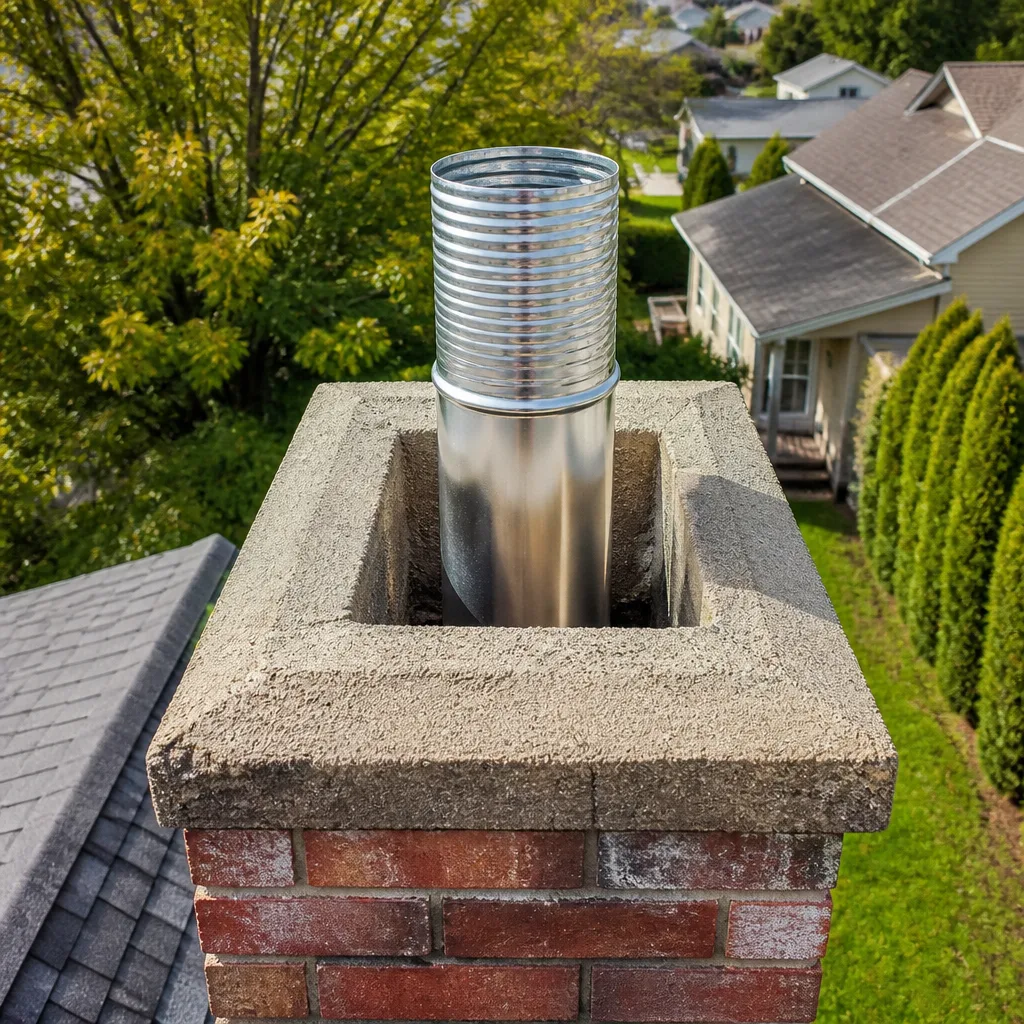
If the camera inspection turns up a problem with the liner, we don’t jump straight to full replacement. We evaluate whether HeatShield liner resurfacing makes sense first. HeatShield is a professional-grade resurfacing system that reforms the interior of an existing liner, and it can extend the life of a chimney that doesn’t need a full reline. When full replacement is the right call, we install DuraFlex flexible liner systems, which work well for the older and non-standard flue configurations common in Tacony’s stock of homes.
The Post-Sweep Sign-Off Checklist
When the sweep packs up and leaves, you should have paper in your hand. A written report is the difference between knowing your chimney was cleaned and knowing what condition it’s actually in. Here’s what to confirm before the technician leaves, or check in the email or printed report within a day or two.
- A written summary of the sweep. What was cleaned, how much creosote was removed, what stage it was, and any areas that couldn’t be fully cleaned.
- Liner condition description. In writing. Photos of the interior of the flue, from the camera inspection. If anything is flagged – a hairline crack in the tile, mortar deterioration – the photos should show it.
- Crown, cap, and flashing assessment. Were these found in good condition, or is work recommended?
- Firebox and damper notes. Any joint separation, damper pitting, or smoke chamber issues, with photos.
- Recommended next steps with a priority level. Distinguish between “do this before burning” and “plan for this within the next year or two.” If something can safely wait, the report should say so.
- The flat-price estimate for any recommended work. Agreed in writing, per job. No price is set over the phone for repair work.
If a sweep recommends thousands of dollars of liner or masonry work and hands you nothing to look at, ask for the camera footage. You’re entitled to it. Our camera inspection and photo report are included with every sweep for exactly this reason – the evidence you need to make your own call should be in front of you, not taken on faith.
And if a sweep says your chimney needs work right now when you’re not sure you believe it, that’s a fair instinct. HeatShield resurfacing, DuraFlex liner installation, and components from Famco, Copperfield, and Olympia Chimney are the kinds of decisions that deserve photos and a written justification before you commit. We’d rather talk you into waiting than talk you into a repair you didn’t need.
Tacony Seasonal Maintenance Calendar
Tacony’s climate shapes the maintenance calendar more than most homeowners realize. The freeze-thaw cycle that does the heavy damage happens in the shoulder seasons – late fall and early spring – when daytime temperatures are mild and overnight temperatures drop below freezing. That’s when water in a mortar joint or a crown crack expands and opens the damage wider. The worst time to find out about a crown crack is in late October, because you’ve got a winter’s worth of freeze-thaw ahead of it.
Here’s a schedule that works for a typical Tacony home with an active fireplace:
- Early fall (September to October): Exterior walk-around. Binocular check of mortar joints, crown, flashing, and cap. Book your annual sweep and inspection before the first burn.
- October: Have the sweep done and the written report in hand before the heating season.
- Through the burning season: Keep an eye on how each fire draws. Note any change in smoke behavior. Clear cap debris as needed from the ground.
- Late winter to early spring (February to March): Second exterior walk-around. The damage from the winter’s freeze-thaw freezing will be visible now. Compare against your fall photos.
- Spring (April): If any exterior repairs were flagged, this is the weather window to do them. Crown and mortar repairs should be done before the next freeze.
- Summer: Off-season. Good time for repairs that need the fireplace out of use.
Very few Tacony homes actually follow this schedule the first year. The goal is to reach it by the second year: once you’ve got the fall report and the spring photos from one season, the second season is a direct comparison.
When Maintenance Turns Into Repair
Maintenance is what keeps a chimney from turning into a repair project. The point where it turns is specific, and it’s worth knowing the triggers so you’re not surprised.
Crown replacement is the right call when the crack or spalling covers a significant portion of the crown surface, or when the crown has separated from the flue tile. A cracked crown that’s caught early can sometimes be sealed. A crown that’s coming apart gets replaced, with proper overhang and a drip edge.
Chimney rebuild – partial or full stack – is what you’re looking at when the mortar joint recession has gone past the brick face, and repointing won’t restore the structural capacity. Often the top two or three courses are the worst, and a partial rebuild of the top of the stack is enough.
Liner work is a category that covers more than homeowners expect:
- HeatShield resurfacing when the existing clay tile liner is cracked or deteriorated but structurally sound enough to be resurfaced. This is often the right call before full replacement.
- DuraFlex flexible liner installation when the flue is a non-standard shape, has offsets, or needs a full new liner. Flexible liners are designed for the awkward configurations common in older Tacony homes.
- Full relining when neither resurfacing nor flexible lining is appropriate – a badly deteriorated masonry flue in need of structural relining.
Firebox and fireplace repair – rebuilding the firebox floor, replacing a warped damper, patching joint separation – is the part of the system that generalist handymen often skip, because it requires the same material knowledge as the flue side. We handle both, so a chimney that crosses from flue to firebox doesn’t need a second contractor.
Every one of these is a job where the estimate should follow a camera inspection and photo report, not a look and a ballpark. That’s the standard we hold to, and it’s the standard to hold any chimney specialist to in Tacony.
Common Mistakes to Avoid
- Skimping on the fall inspection because “it passed last time.” A chimney that passed five years ago has had five winters of freeze-thaw since. The exterior checklist exists precisely because the failure mode is invisible from the fireplace and accumulates every season.
- Burning unseasoned wood. Green or wet wood produces more creosote than dry, seasoned wood. In a Tacony home with an old clay tile liner, the extra creosote is exactly what you’re trying to avoid. Only burn wood that’s been split and dried for at least a season.
- Ignoring the crown because it’s “just a crack.” The crown is what keeps water out. A crack that lets water in during the fall rains feeds the freeze-thaw damage through the entire winter. Crown repair is one of the least expensive fixes on this whole list, and one of the most expensive to defer.
- Trying to sweep beyond Stage 1 creosote yourself. Stage 2 and Stage 3 creosote don’t come off with a homeowner brush. The pressure required to remove them risks cracking the clay tile liner, and a cracked liner is a bigger problem than a dirty one. Leave it to a sweep.
- Putting off a liner inspection after a chimney fire. Even a small chimney fire – the kind that sounds like a freight train and burns itself out fast – can crack the liner. Anyone who’s had one should get a camera inspection before lighting another fire.
- Hiring a “handyman sweep” for structural work. Sweeping is the easy part. Cap and crown work, liner installation, firebox repair, and rebuilds take trade-specific materials knowledge. Brands like Famco, Copperfield, and Olympia Chimney are professional-grade because they’re rated for these specific applications, and the installation has to be right.
- Skipping the written report. If a sweep won’t give you photos and a written summary, you don’t have a maintenance record. You have a receipt.
See the difference
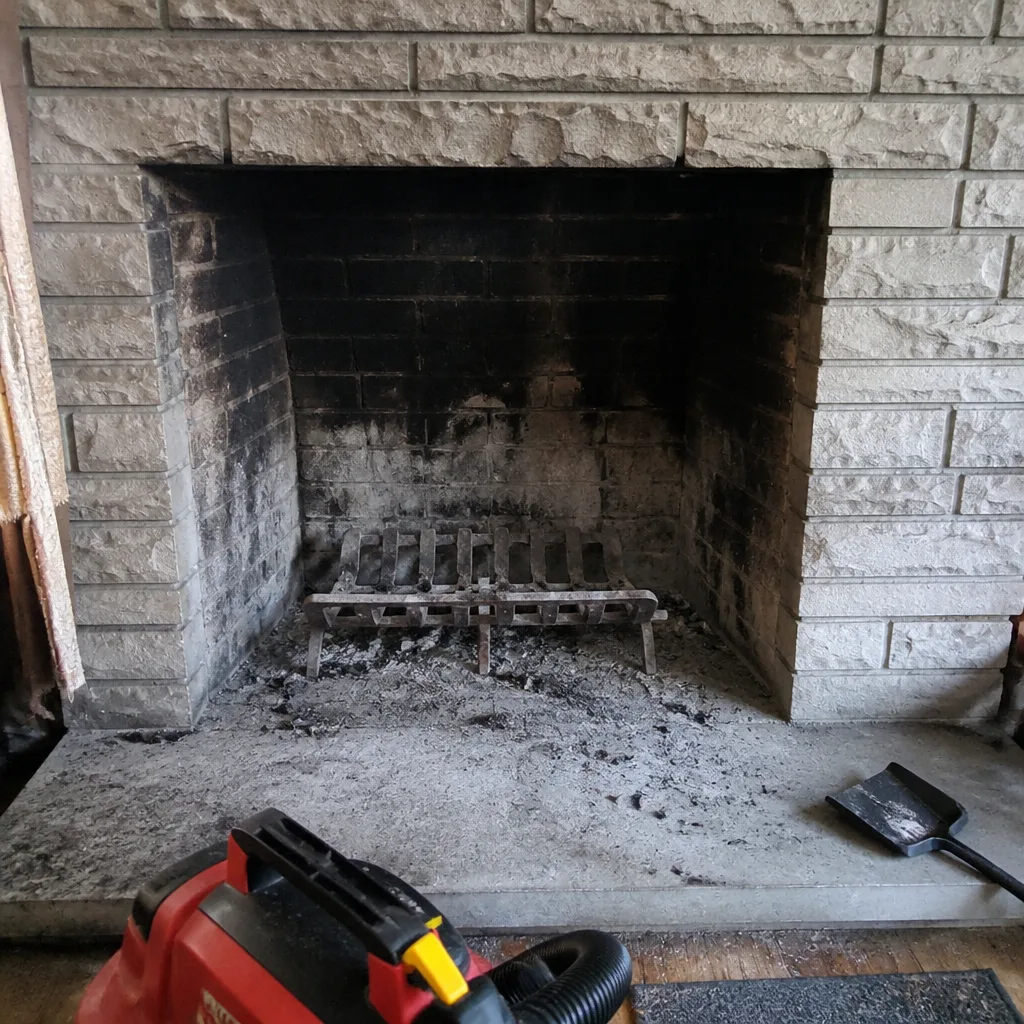 Before
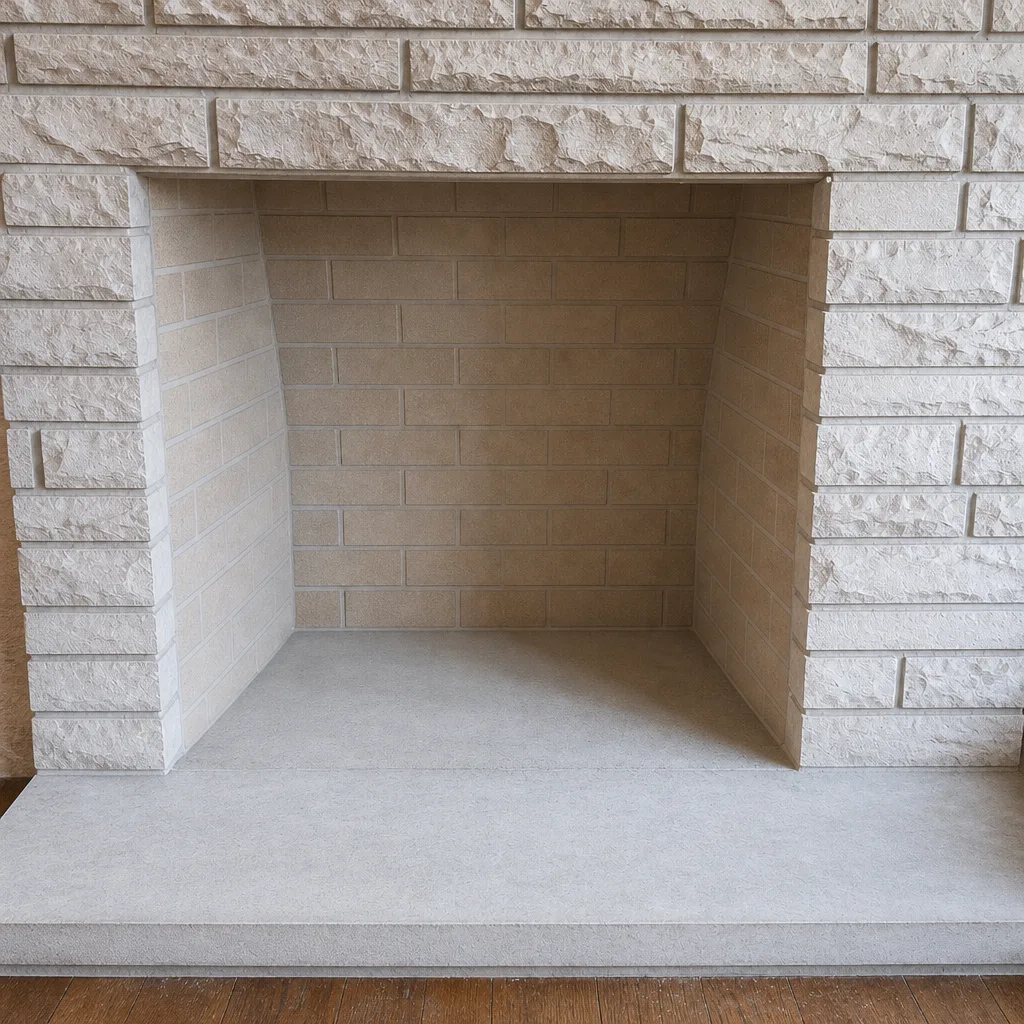 After
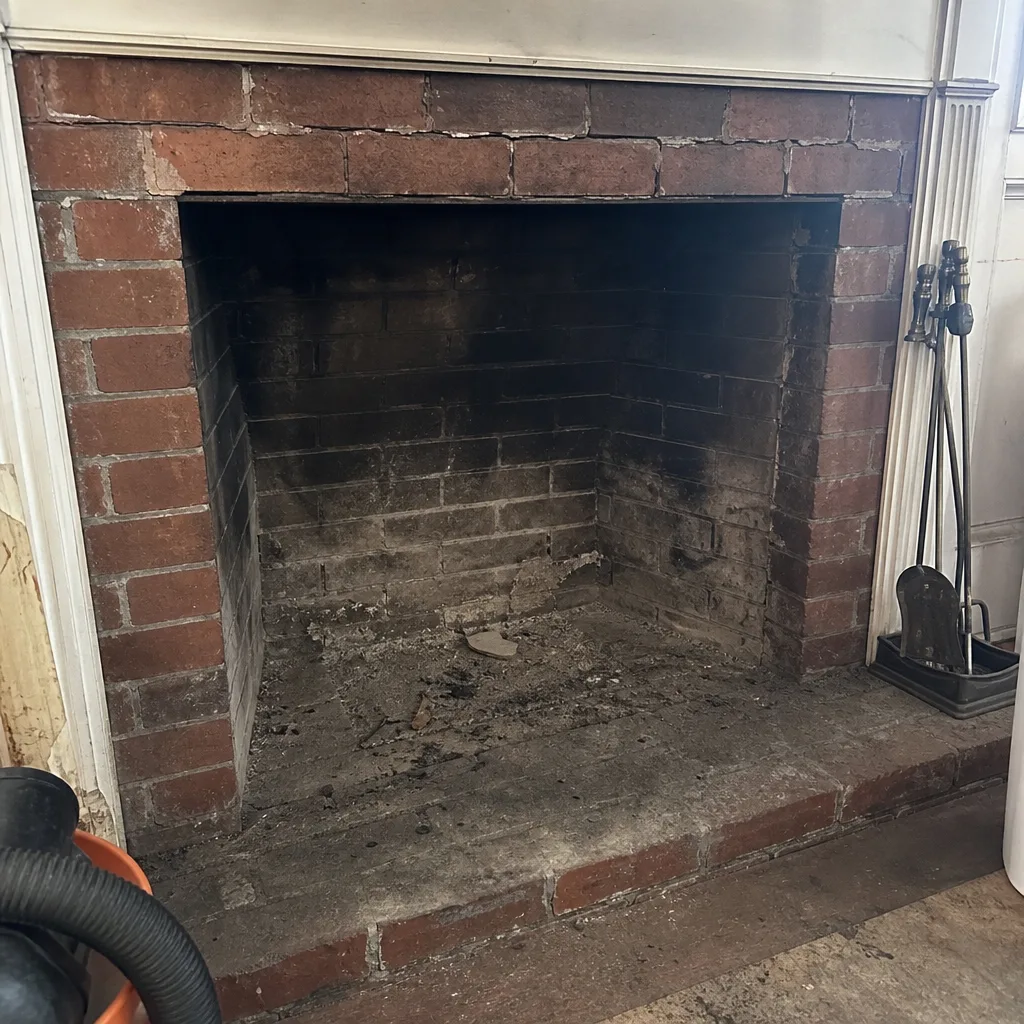 Before
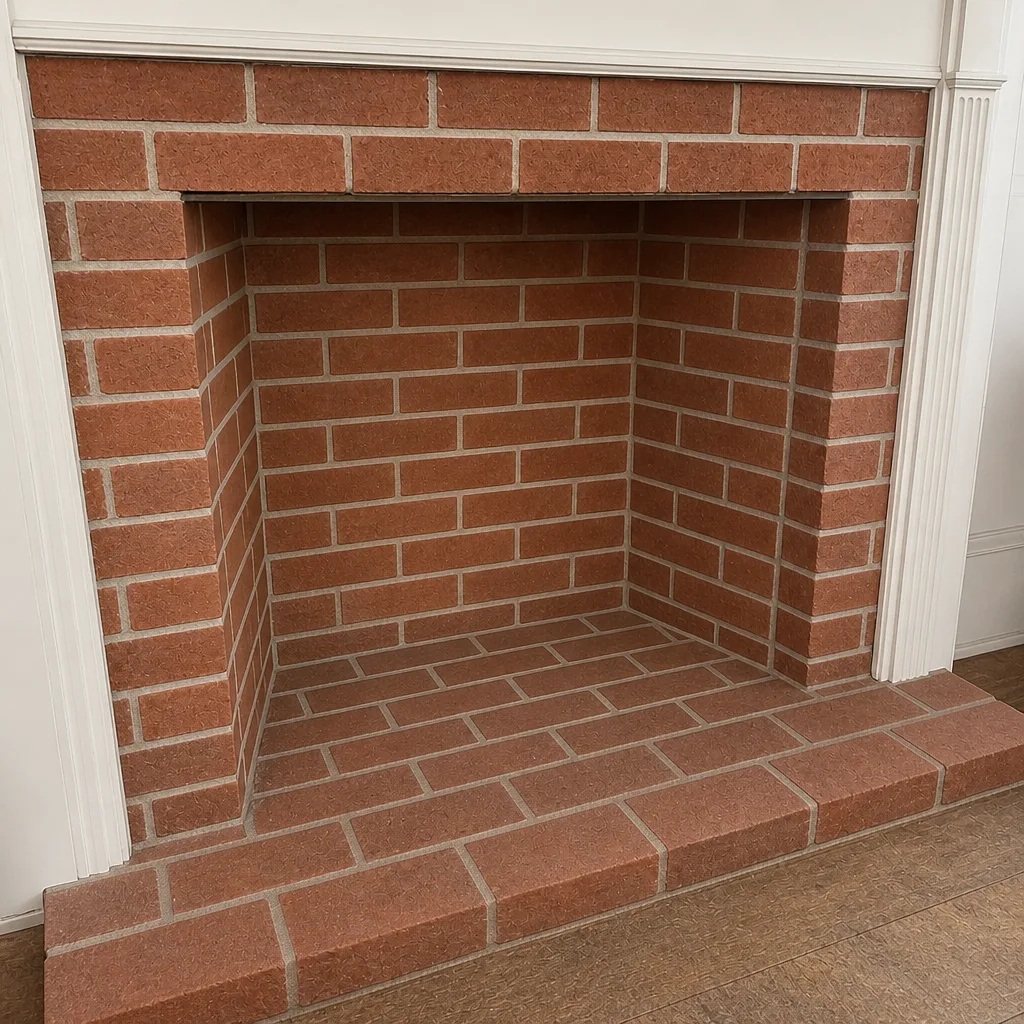 After
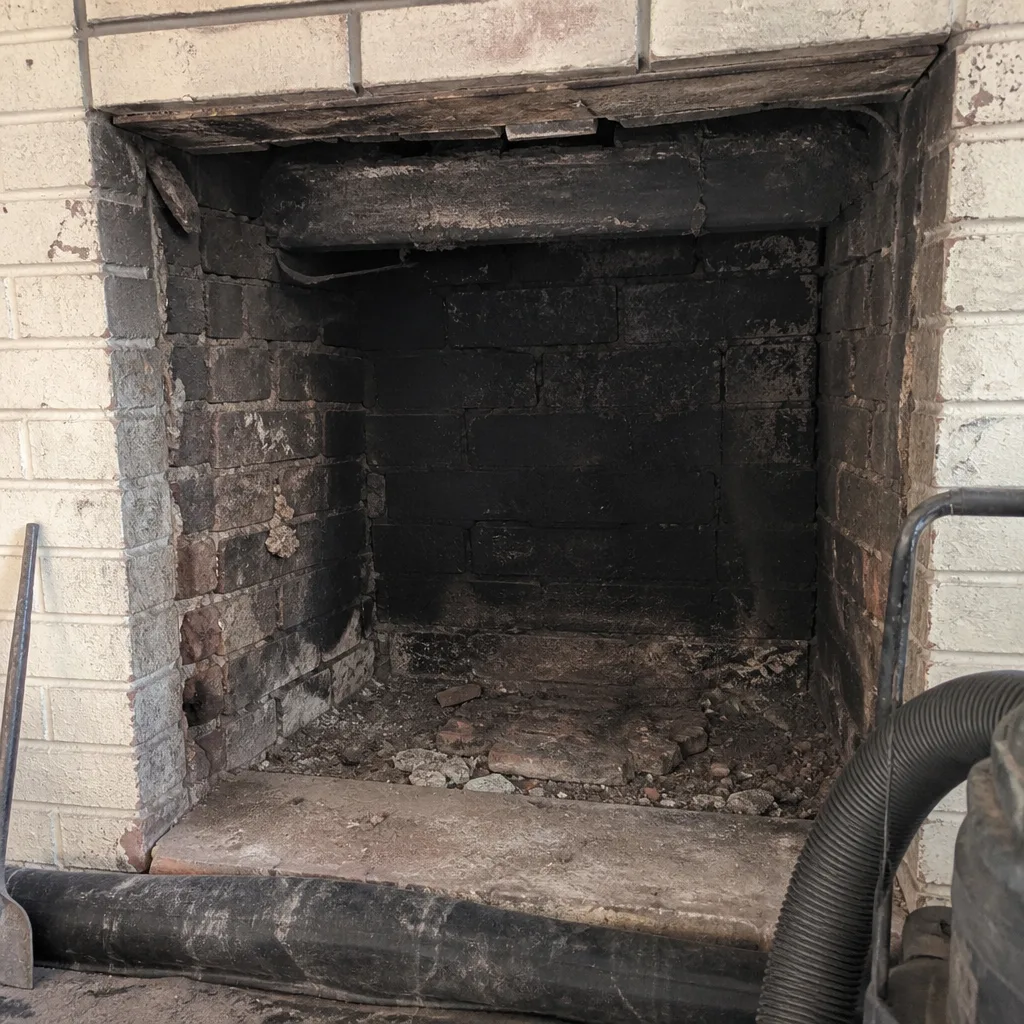 Before
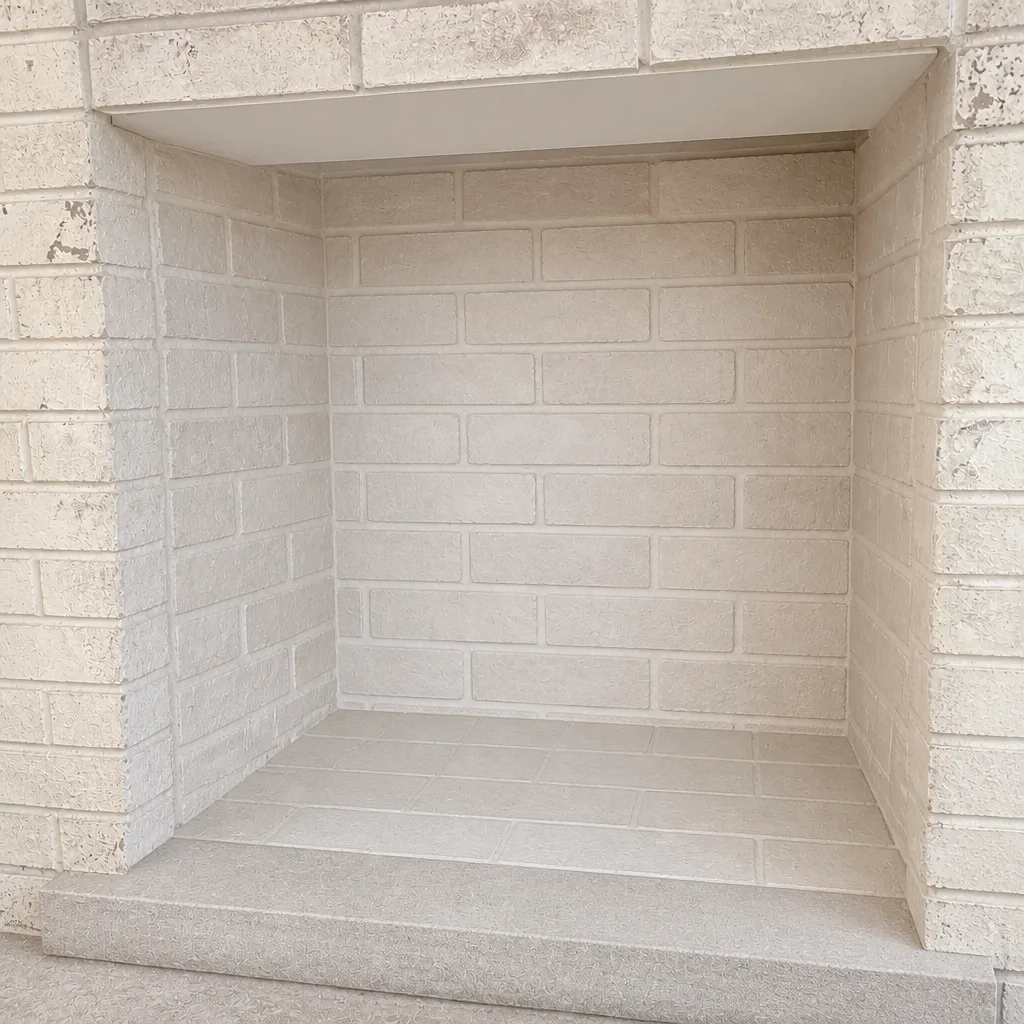 After
When to Call a Professional
Some maintenance is a phone call. Call a professional sweep if any of these are true: you haven’t had the chimney swept and inspected in the last year and you burn regularly; your exterior walk-around shows mortar joint recession deeper than the joint width, a crown crack wider than a credit card edge, or flashing lifting off the brick; your interior check finds firebox joint separation or a warped damper; your flashlight-and-mirror check reveals Stage 2 or Stage 3 creosote; you’ve had a chimney fire, even a small one; you’ve noticed water stains on the smoke chamber or masonry; or you’ve purchased a Tacony home and have no record of the last sweep.
Chimney Sweep Tacony offers free estimates in Tacony – call (833) 370-3312. We answer 24/7. Fast dispatch from 7am to 7pm, Sunday through Friday. Every sweep includes a flat-price estimate agreed before booking, a camera inspection, and a photo report.
Frequently Asked Questions
Once a year, before the start of the burning season, for any home with an active wood-burning or gas fireplace. Older brick chimneys with original clay tile liners – which describes a lot of Tacony’s housing stock – benefit from an annual inspection even if the sweep itself removes very little, because the inspection is what catches crown cracking, mortar recession, and liner deterioration early. Gas fireplaces still need annual inspection because they still vent combustion byproducts up the flue. Call (833) 370-3312 to book a sweep.
It’s set per job based on the configuration of your chimney and what you need, and every estimate is free and agreed in writing before the appointment. The written estimate is the final price – no upsells on the day. Call (833) 370-3312 for an exact quote.
Creosote builds up one layer at a time, and the stage it reaches depends on how you burn and how the flue is configured. A buildup that started as Stage 1 can move to Stage 2 or Stage 3 over a few heating seasons, and Stage 3 creosote is the flammable material that causes chimney fires. Meanwhile, a crown crack that’s ignored lets in water that eats away at the brick and mortar through every winter freeze-thaw cycle. The risk isn’t theoretical, but it also isn’t immediate – it accumulates. The right move is a sweep and inspection before the next heating season, not a panic call after the first symptom. Call (833) 370-3312 for a free estimate.
Many liners can be resurfaced rather than replaced, and HeatShield is the system we use to evaluate that path first. A camera inspection shows whether the existing clay tile liner is a candidate for resurfacing (cracked or deteriorated but structurally sound) or whether full relining with a DuraFlex flexible liner system is the better route. You get to see the camera footage and photos before deciding. Nothing is recommended without evidence you can see for yourself. Call (833) 370-3312 for an inspection and a free estimate.
Look for three things: mortar joints recessed deeper than the joint width, crown cracks that run across the crown or are wider than a credit card edge, and flashing that’s lifted off the brick where the chimney meets the roof. Any of those is a reason to book an inspection before the burning season starts, because the freeze-thaw cycle over the winter will make each one worse. Call (833) 370-3312 for a free estimate.
No, not safely beyond the very limited homeowner tasks on this checklist. The flue brush has to be sized to the cross-section, and the liner condition has to be understood before any brush goes up – brushing a hairline-cracked clay tile liner can turn a small crack into a bigger one. Homeowners can safely clear cap debris from ground level, lubricate the damper, and photograph everything for the sweep. The flue itself belongs to a professional. Call (833) 370-3312 to book an annual sweep.
The Bottom Line
Chimney maintenance in Tacony comes down to a few things you can do yourself and a few things that have to be done by a trained sweep. On your side: the fall exterior walk-around, the interior photo documentation, the flashlight-and-mirror check to identify creosote stage, damper lubrication, and asking for the written report at the end of every visit. On the professional side: the flue brush, the camera inspection, the liner evaluation, the crown and mortar repairs, and the firebox work. The freeze-thaw cycle that works away at Tacony’s older brick chimneys doesn’t take a season off – and the checklist above is how you keep up with it. When you’re ready to have the system looked at by someone who can identify the difference between a Stage 1 dusting and a Stage 2 crust, and who’ll show you the photos to back it up, we’re here.
Call (833) 370-3312 for a free estimate. We answer 24/7. Fast dispatch from 7am to 7pm, Sunday through Friday. Flat-price estimate agreed before booking, camera inspection and photo report included.
Written by the team at Chimney Sweep Tacony.