
Last updated November 22, 2026
 Sweep & inspection
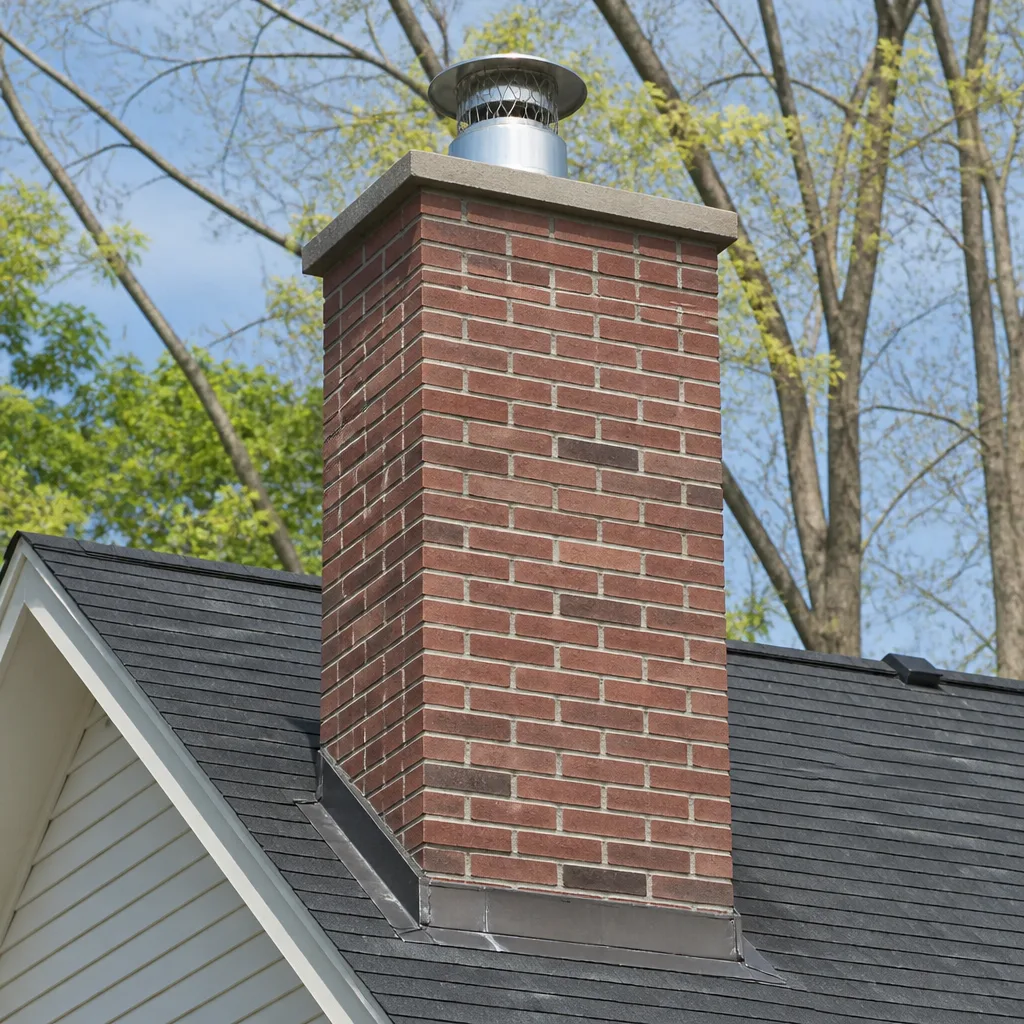
 Caps & crowns
 Flue relining
 Masonry repair
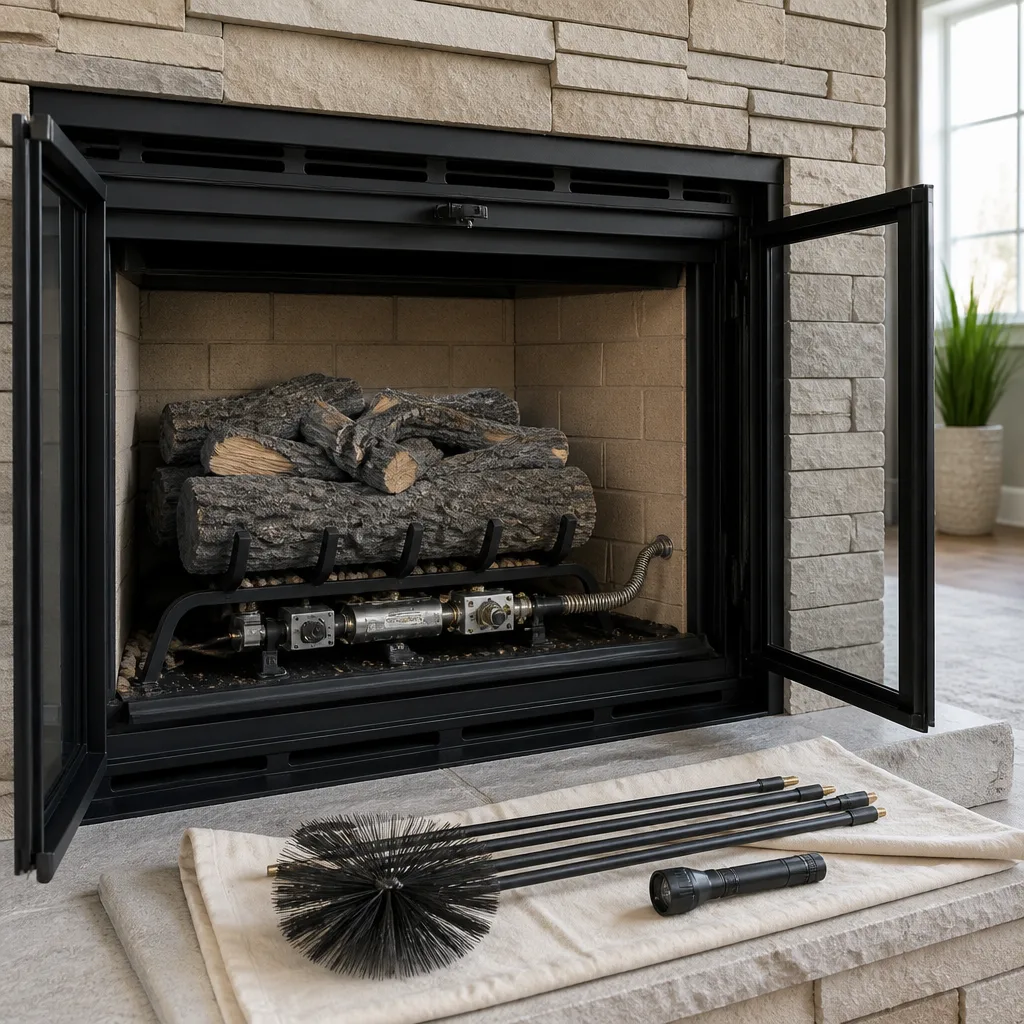 Gas fireplace service
Level 1 sweep and inspection to the NFPA 211 annual standard - flue, crown, cap, and flashing checked and photographed
Chimney sweep logs do not sweep chimneys. They loosen some creosote - which then falls where a brush and vacuum still have to collect it.
Chimney Cleaning Cost Breakdown: The Tacony Homeowner’s Reference for 2026
The cheapest sweep quote is almost never the least expensive chimney cleaning. A $79 special in Tacony usually buys a brush down the flue and nothing else: no written inspection report, no notes on liner condition, no paperwork you could hand an insurance adjuster if a claim ever comes up. The $200 – $275 job a properly equipped sweep quotes includes a documented Level 1 inspection, a written record of what was found, and work done under liability coverage. That gap is the whole story of chimney pricing, and it’s what this guide unpacks line by line. You’ll learn what each part of a sweep should cost separately in Tacony’s 2026 market, which add-ons are legitimate and which are upsells, and how to compare two bids without getting fooled by the bottom line.
Quick Answer
A standard chimney sweep with a Level 1 inspection in Tacony typically runs $200 – $275 in 2026. That covers brush cleaning of a single flue, a visual inspection of the accessible chimney and firebox, a written report, and disposal of the soot and creosote removed. Add-ons like a camera inspection, waterproofing, or smoke chamber work push the total higher, but each should be quoted separately and only when the inspection shows a real reason for it.
Styles & brands we work with
- Sweep & inspection
- Caps & crowns
- Flue relining
- Masonry repair
- Gas fireplace service
Table of Contents
- What a Standard Chimney Sweep Should Include
- The Line-Item Cost Breakdown
- Cost Drivers Specific to Tacony Housing
- Legitimate Add-Ons vs. Upsell Tactics
- The True Cost of Deferring a Cleaning
- How to Compare Bids Apples-to-Apples
- What Low Quotes Are Almost Certainly Omitting
- Frequently Asked Questions
What a Standard Chimney Sweep Should Include
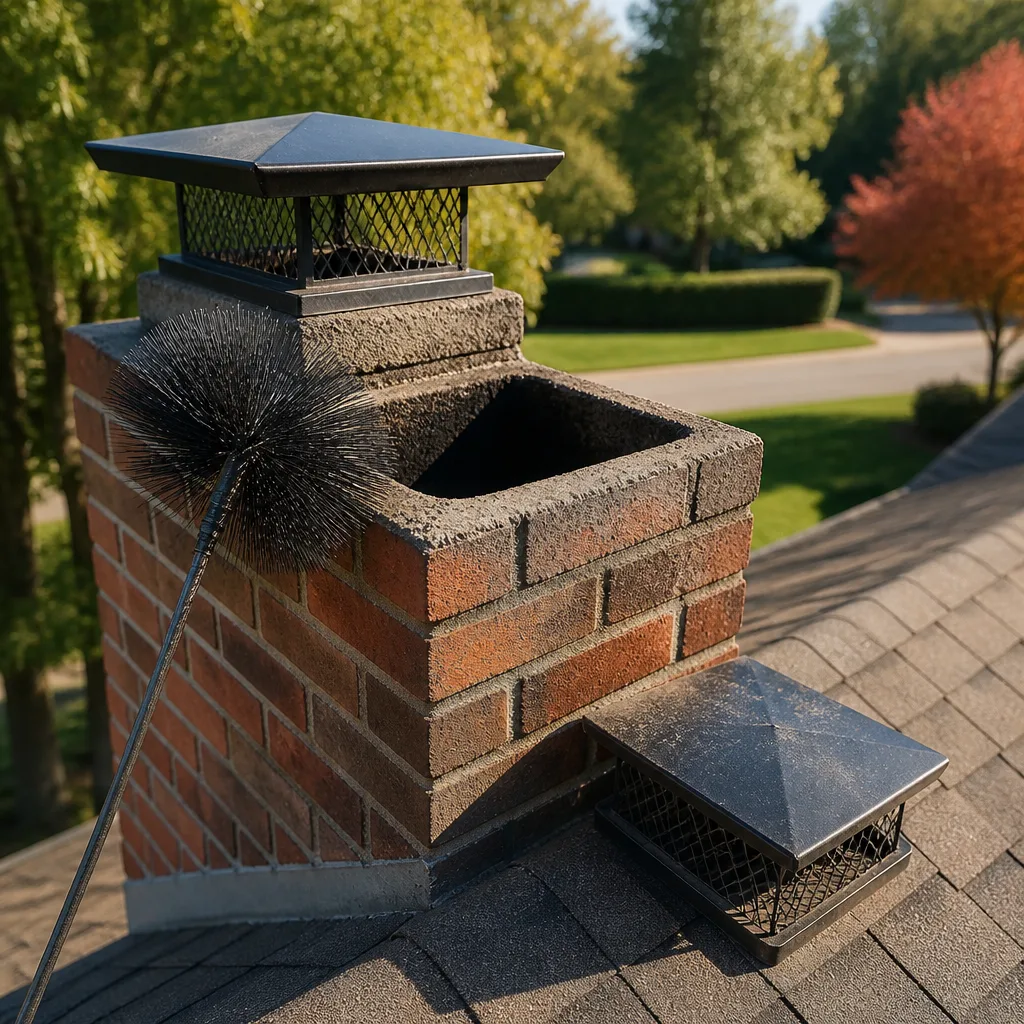
A chimney sweep is not just a brush on a rod. In the trade, a proper cleaning of a wood-burning flue means removing creosote and soot from the firebox, damper, smoke chamber, smoke shelf, and the flue itself, then checking that the whole assembly is sound. When you book a chimney sweep in Tacony, here’s what should be part of the base price, not tacked on afterward:
- Cleaning of one flue from the firebox up through the smoke chamber and flue, using appropriate brushes for the liner type. Clay tile liners need different tooling than stainless.
- A Level 1 inspection, which is a visual check of all accessible parts of the chimney and venting system, done during the sweep. This is the standard inspection for a chimney that’s in regular use and hasn’t changed.
- A written report noting what was found: creosote level, liner condition, cap and crown condition, any cracks or gaps. This is the document that matters when you sell the house or file a claim.
- Disposal of the soot and creosote removed. It’s a hazardous material in quantity and shouldn’t end up in your trash can.
- Drop cloths and a HEPA vacuum so the interior stays clean. A sweep that leaves a dust film on your furniture cut a corner somewhere.
The written report is the piece homeowners undervalue most. A brush-only crew can clean a flue adequately and hand you nothing but a receipt. That receipt won’t tell the next inspector, your insurer, or a future buyer anything about the condition of the chimney. In our experience, the documentation is often worth as much as the cleaning itself, especially on older Tacony row homes where the liner has likely been through decades of heating seasons.
One more thing worth knowing: a Level 1 inspection is fine for routine maintenance, but if you’ve had a chimney fire, a change in the system (new appliance, relined flue), or a visible problem, you need a Level 2 inspection with a camera. That’s a separate line item, covered below.
The Line-Item Cost Breakdown
Here’s how a Tacony chimney cleaning breaks down by component in 2026. Treat these as typical estimated ranges, not fixed prices. Every job is different, and the written estimate you receive sets the final number.
- Sweep labor (single flue): $120 – $175. This is the cleaning itself, firebox to cap, with the right tooling for your liner.
- Level 1 inspection documentation: $50 – $75 when itemized separately. Many sweeps fold this into the base price, which is fine, but ask whether a written report is included either way.
- Disposal and cleanup: $20 – $40. Soot and creosote disposal plus interior protection.
- Additional flue: $75 – $125 per flue. A second flue on the same chimney (common on Tacony homes with a heating flue and a fireplace flue) needs its own cleaning and inspection.
- Level 2 camera inspection: $100 – $200, typically when there’s a reason to look deeper. Includes video of the flue interior and a written assessment.
Add those up and you land in the $200 – $275 range for a single-flue sweep with documentation, which is the realistic number for a competent job in Tacony. The $79 or $99 special you see advertised is usually the labor line only, with inspection and disposal either omitted or positioned as upsells once the crew is in your living room.
What pushes a job above that range? Access difficulty (a chimney on a steep roof pitch or behind a tight alley), heavy creosote that needs more than a single pass, or a flue that’s never been cleaned and has glaze. Those are real conditions, not sales tactics, and a good sweep will explain which applies before quoting.
Why the Base Price Varies Between Sweeps
Two sweeps can quote the same Tacony row home differently for honest reasons: one includes the written report and the other doesn’t; one carries liability insurance and one is a handyman with a brush; one charges travel separately and one doesn’t. When you line up the actual scope, the gap usually narrows to $20 – $40. When it doesn’t, something is missing from the cheaper bid.
Cost Drivers Specific to Tacony Housing
Tacony’s housing stock shapes the price of a sweep more than most homeowners realize. The neighborhood’s row homes and twins were built for solid-fuel heat, which means many chimneys here were designed with multiple flues serving different appliances. That configuration drives cost in a few specific ways.
- Number of flues per chimney. A row home with a fireplace flue plus a heating flue plus a water heater vent can have two or three flues in one stack. Each needs its own cleaning and inspection, so a job that looks like one sweep is really two or three.
- Flue height and access. Roof access on a Tacony row home often means working from a ladder at a party wall or through a narrow gap between structures. That’s slower and more careful work than a freestanding chimney with open roof around it, and it can add to labor.
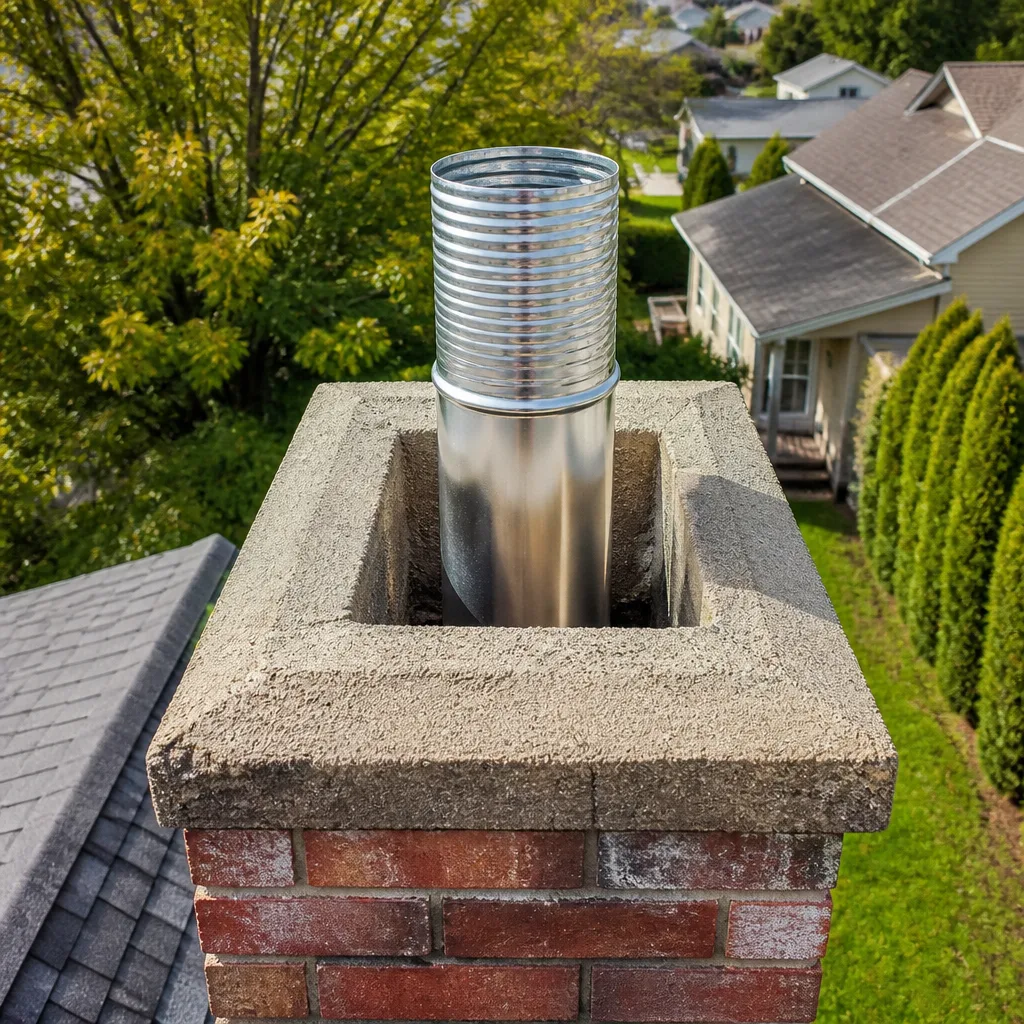
- Liner material. Original clay tile liners are common in Tacony’s older homes, and clay cracks and spalls with age. A stainless liner (we install DuraFlex flexible systems where rigid liner won’t fit the flue’s shape) cleans differently and nears the end of its service life differently. The sweep needs to know which you have before quoting.
- Creosote condition. A flue that’s been swept annually has light, flaky Stage 1 creosote that brushes off easily. A flue that’s gone several seasons without cleaning can hold glazed Stage 3 creosote, which takes more effort and may call for chemical treatment first.
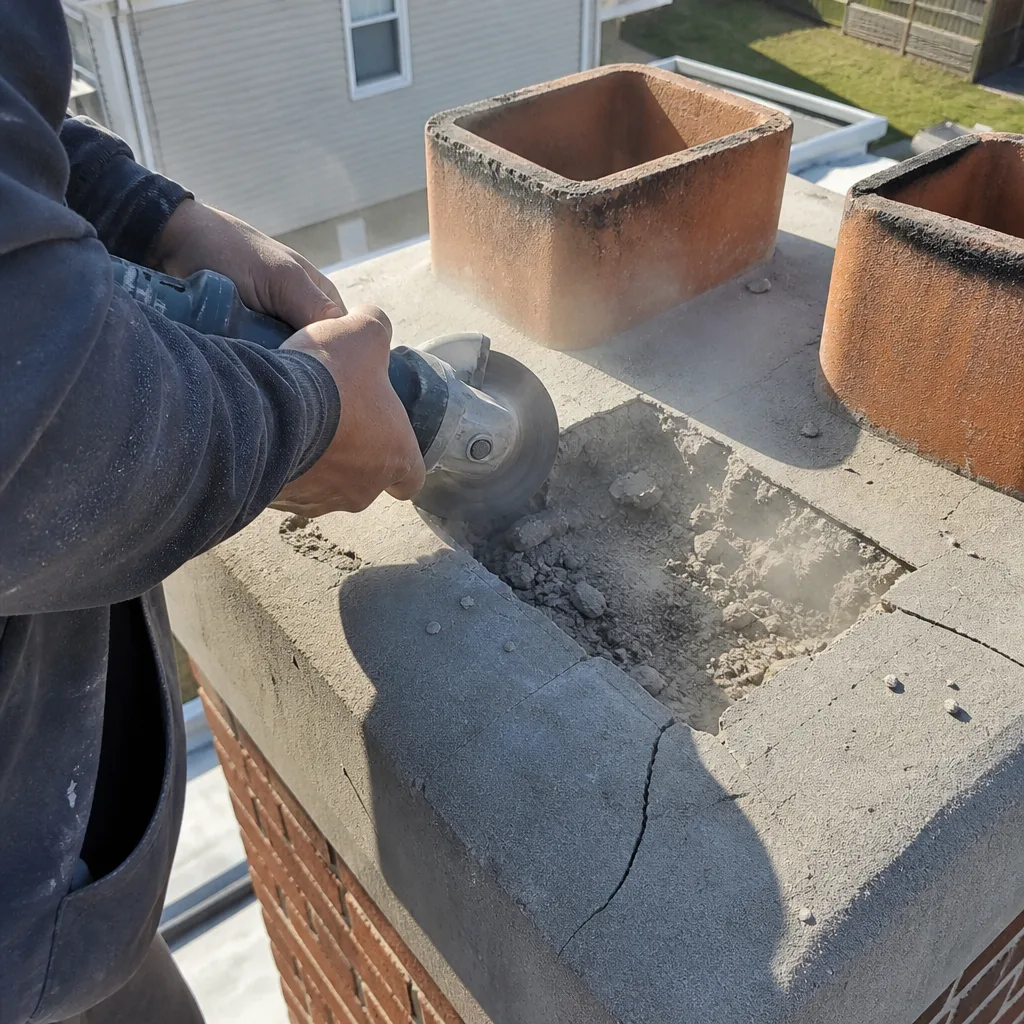
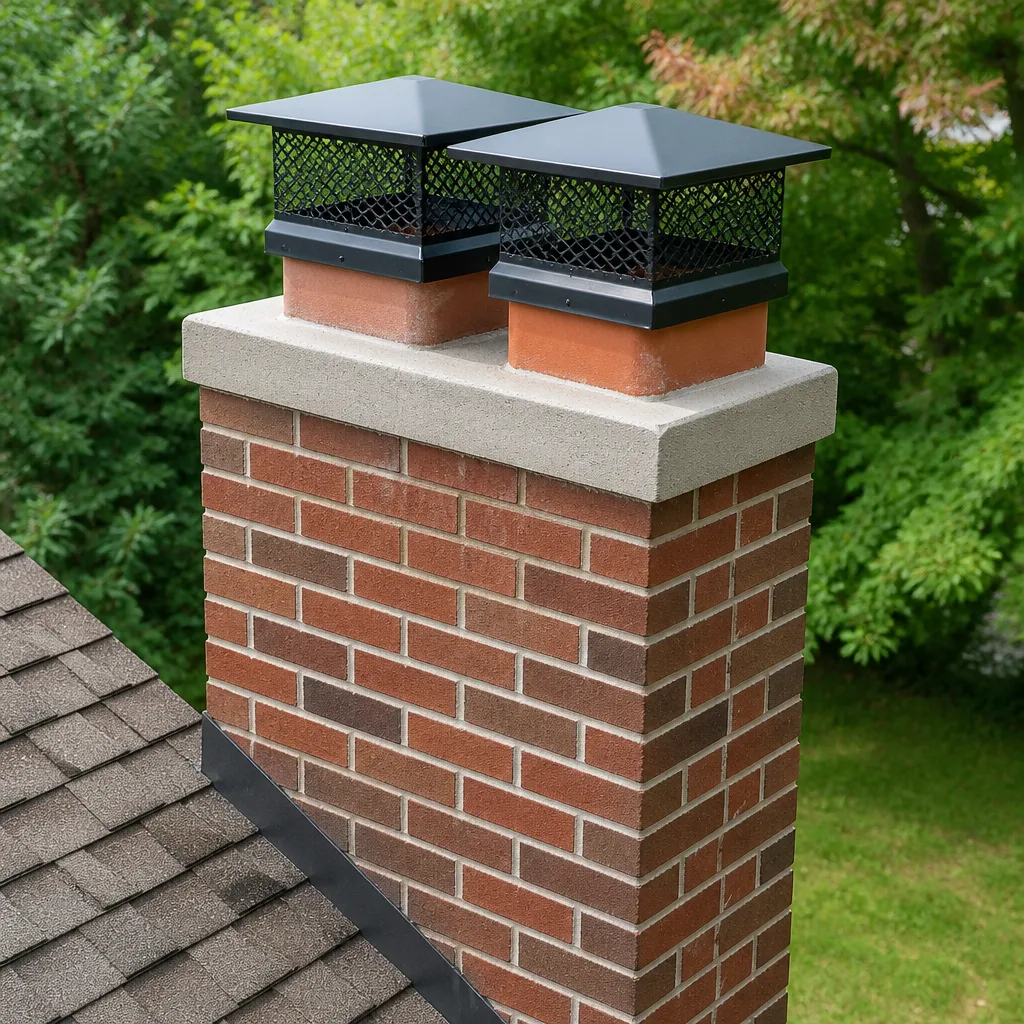
- Cap and crown condition. The inspection portion of a sweep includes the top of the chimney. A missing or damaged cap lets water and animals in, and a cracked crown lets water into the masonry. If either needs attention, it’s a separate line item but worth knowing about. Our chimney cap & crown work covers exactly that repair.
If you’re comparing quotes and one is much lower than the others, ask how many flues it covers and whether the top of the chimney is included in the inspection. Those two answers explain most of the difference in Tacony.
Legitimate Add-Ons vs. Upsell Tactics
The line between a genuine recommendation and an upsell is whether the technician can show you evidence. Anything added to the base sweep should come with a reason you can see: a photo, a camera video, or a direct observation of condition. Here’s how to sort the common add-ons.
Legitimate Add-Ons
- Level 2 camera inspection ($100 – $200): Justified if there’s been a chimney fire, if you’re buying the home, if the liner type is unknown, or if the sweep sees something during the Level 1 that warrants a closer look. The camera shows the inside of the flue, so you see what the technician sees.
- Waterproofing treatment ($150 – $400 depending on chimney size): Worth it when the masonry is sound but porous, and especially in Tacony where freeze-thaw cycles work on brick and mortar joints every winter. Waterproofing should only be applied to sound masonry, never over active leaks or spalling brick.
- Smoke chamber parging ($200 – $500): The smoke chamber above the damper is often left rough by original construction, and rough surfaces collect creosote and slow the draft. Parging smooths it. This is legitimately needed when the chamber is corbelled and rough; not every chimney needs it.
- Cap installation ($200 – $500 installed, depending on style): A stainless or copper cap keeps rain, birds, and debris out of the flue. If yours is missing or rusted through, replacing it is a real repair, not a frill.
- Liner resurfacing with HeatShield ($1,200 – $2,500): When the clay liner has cracks or gaps but is otherwise intact, HeatShield resurfacing can restore it without a full reline. We use HeatShield as a professional-grade repair option before recommending replacement. It’s not right for every liner, but where it fits, it saves significant money over pulling the liner out.
Watch for These Upsell Patterns
- “Your liner is failing” with no camera evidence. Ask to see the video before agreeing to anything.
- A recommendation to waterproof a chimney that’s actively leaking. Waterproofing seals the surface; it doesn’t fix the source of the leak. Find the leak first.
- Any recommendation to reline a flue that a camera inspection hasn’t shown to be damaged. A visual check alone doesn’t justify a liner rebuild.
- A hard sell on a full rebuild when the issue is a cracked crown or a few spalled bricks. Those are chimney repair jobs, not rebuilds.
None of these add-ons is inherently suspicious. The question is always whether the technician can show you why it’s needed and whether deferring it is safe. A specialist who can tell you “this can wait until next season” is giving you information you can trust.
The True Cost of Deferring a Cleaning
Skipping a season or two of chimney cleaning doesn’t cost you anything on the day. It costs you later, and usually more. The reason is creosote, the residue that builds up on the flue walls every time you burn wood. It progresses through stages, and each stage raises the cost of putting things right.
- Stage 1 creosote: Light, flaky, and brushes off during a routine sweep. A $200 – $275 annual cleaning handles it.
- Stage 2 creosote: Denser, tar-like, and harder to remove. It may need chemical treatment before brushing, which adds to the sweep cost. By this stage the deposit is also more combustible.
- Stage 3 creosote: Glazed, hard, and highly combustible. Removal is labor-intensive, and a chimney fire becomes a genuine risk. If a fire has occurred, the liner may be damaged and need repair or replacement. A reline with a DuraFlex system can run several thousand dollars, and structural damage can push it higher.
Put a number on it: an annual sweep in Tacony at roughly $200 – $275, year over year, versus a flue that’s gone unattended and now needs a camera inspection, chemical treatment, and possibly a liner repair or replacement. The deferred cleaning didn’t save money; it just moved the bill to a larger invoice with more items on it.
There’s also the safety side, which is the reason the cost comparison matters in the first place. Creosote fires burn hot enough to damage the liner and spread into the structure. A blocked or damaged flue can let carbon monoxide back into the house instead of up the chimney. Those outcomes aren’t part of a cost guide’s price table because you can’t quote them. The annual sweep is the prevention, and it’s the cheaper line item by every measure.
Homes that burn wood steadily through the winter, or that burn unseasoned wood, build creosote faster. If that’s your pattern, don’t stretch the interval. If you burn occasionally and the flue is in good shape, the timing is more forgiving, but a yearly visual check is still the baseline.
How to Compare Bids Apples-to-Apples
Two quotes for the same Tacony chimney can differ by $100 and cover completely different work. The way to compare them honestly is to ask the same questions of each bidder and check that the answers match line for line. Here’s the checklist we recommend every homeowner use before signing anything.
- How many flues does the price cover? Tacony row homes often have more than one. Get the number in writing.
- Is a Level 1 inspection included, and is the report written? Verbal findings aren’t documentation. Ask for a written report.
- Is the top of the chimney included? Cap, crown, and flue tile condition should be checked and noted as part of the sweep.
- Is disposal and cleanup included, or is there a separate charge? It should be stated clearly either way.
- Is a camera inspection included, and if so, is the video shared with me? If it’s recommended as an add-on, ask what the Level 1 inspection found that triggers it.
- Are the technicians insured, and is the work performed to a recognized standard? Ask about both. A proper sweep works to the industry standard for chimney inspection and cleaning, not a house method.
- What happens if the sweep finds a problem mid-job? The answer should be: you’re shown the evidence, and you decide whether to proceed. No work should be performed beyond the original scope without your approval.
- Is the estimate in writing, and does it set the final price? It should. The written estimate is the number you can hold the company to.
Run both bids through that list. The cheaper one will usually reveal where it cut. If it didn’t cut anywhere, it’s a fair bid and worth taking. If it did, you now know what you’d be paying for later.
We work from the same checklist on our side. We quote per job, put the scope in writing, and the written estimate sets the final price. Nothing gets added without the evidence to support it and your approval to proceed.
What Low Quotes Are Almost Certainly Omitting
The $79 sweep is a real job, just a smaller one than you think. Here’s what typically falls out of a bargain price.
- The written inspection report. A brush-only job produces a receipt, not a record. That matters when you sell, when you file a claim, and when the next technician needs to know what condition the liner was in.
- The top-of-chimney check. Cap, crown, and flue tile condition are often skipped when the price only covers the flue interior. You won’t know the crown is cracked until water is coming through the ceiling.
- Proper disposal. Soot and creosote have to go somewhere. A bargain sweep may leave it to you.
- Liability coverage for the work. If the crew damages a liner or drops something down the flue, an uninsured operator leaves you holding the repair. Insurance-backed workmanship is part of what the higher price buys.
- A second flue. If your chimney has two flues and the quote silently covers one, the real price was always higher.
None of this means every low quote is a scam. A smaller operator with low overhead can do a legitimate sweep at a lower price. What it does mean is that the bargain price is a signal to ask exactly what’s in the scope. When you compare the scope line for line, the $79 sweep and the $240 sweep usually aren’t selling the same thing.
One more consideration specific to Tacony: many of the homes here have been through several heating seasons without a documented cleaning, and the clay liner may be years past its expected life. A sweep that documents what it finds gives you a baseline to plan from. A sweep that cleans and leaves gives you nothing to plan with. The difference shows up later, when you’re deciding whether to repair, resurface with HeatShield, or reline, and you realize you don’t know what state the flue was in five years ago.
See the difference
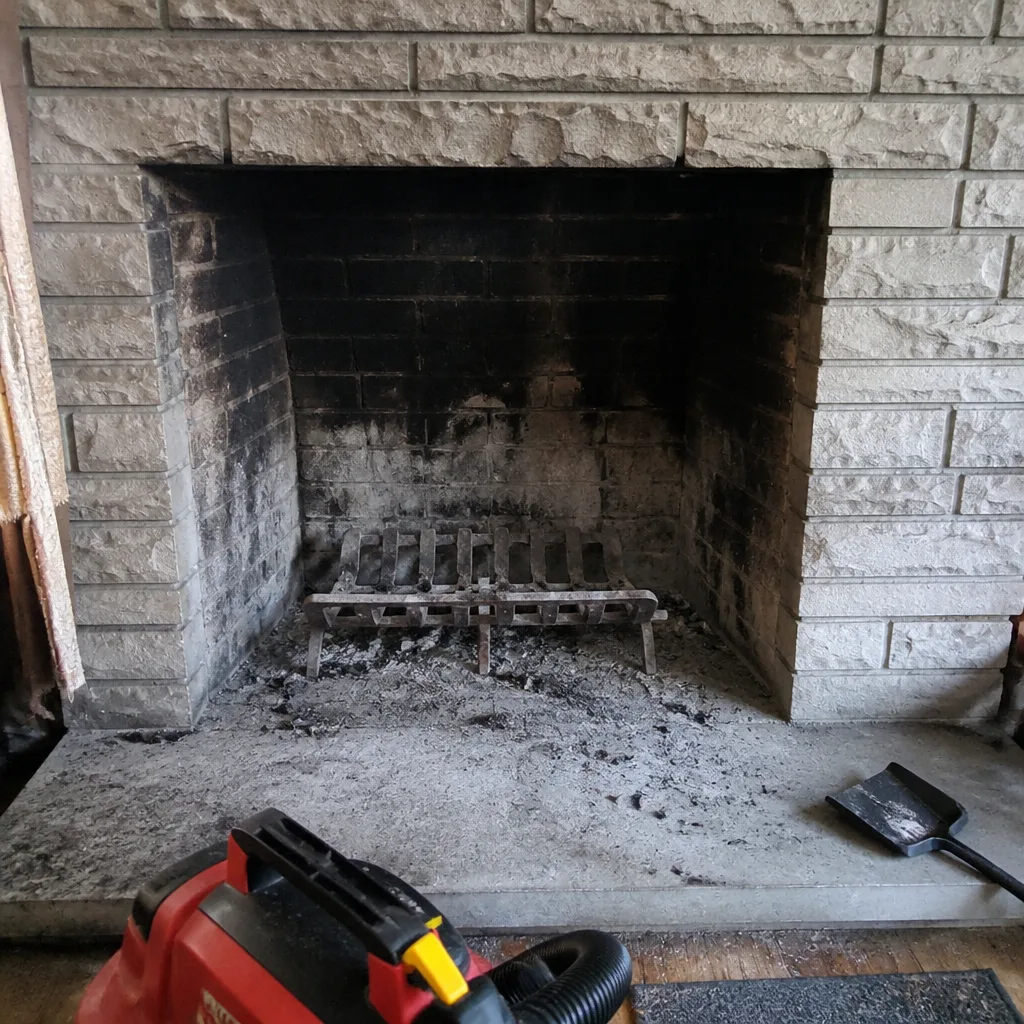 Before
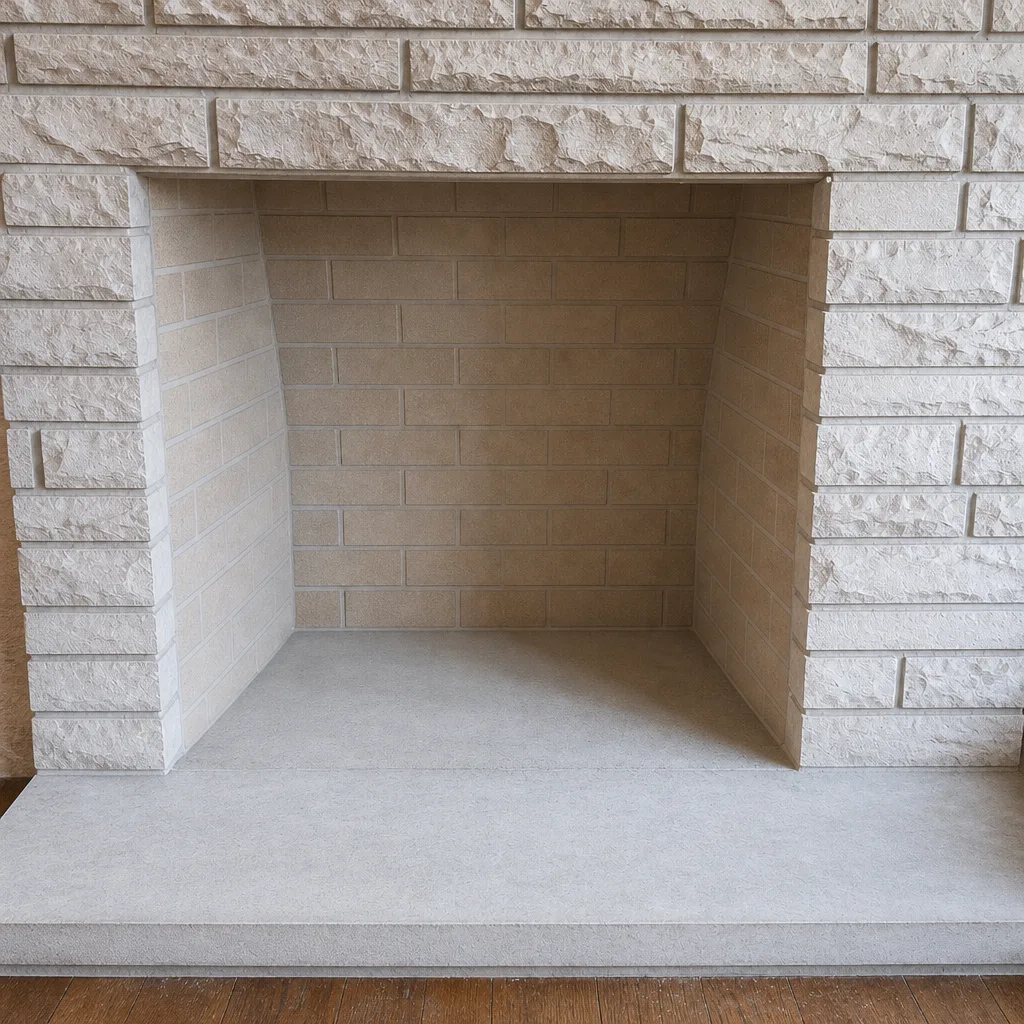 After
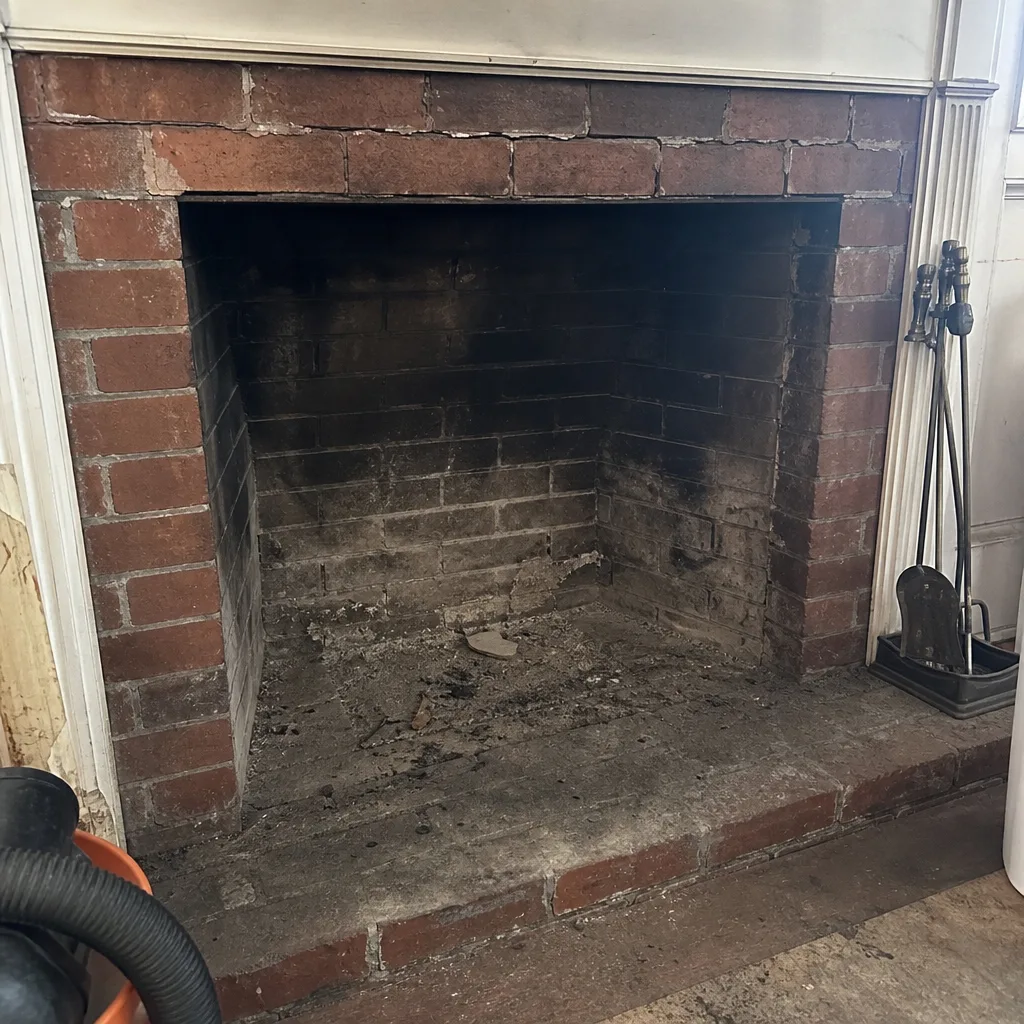 Before
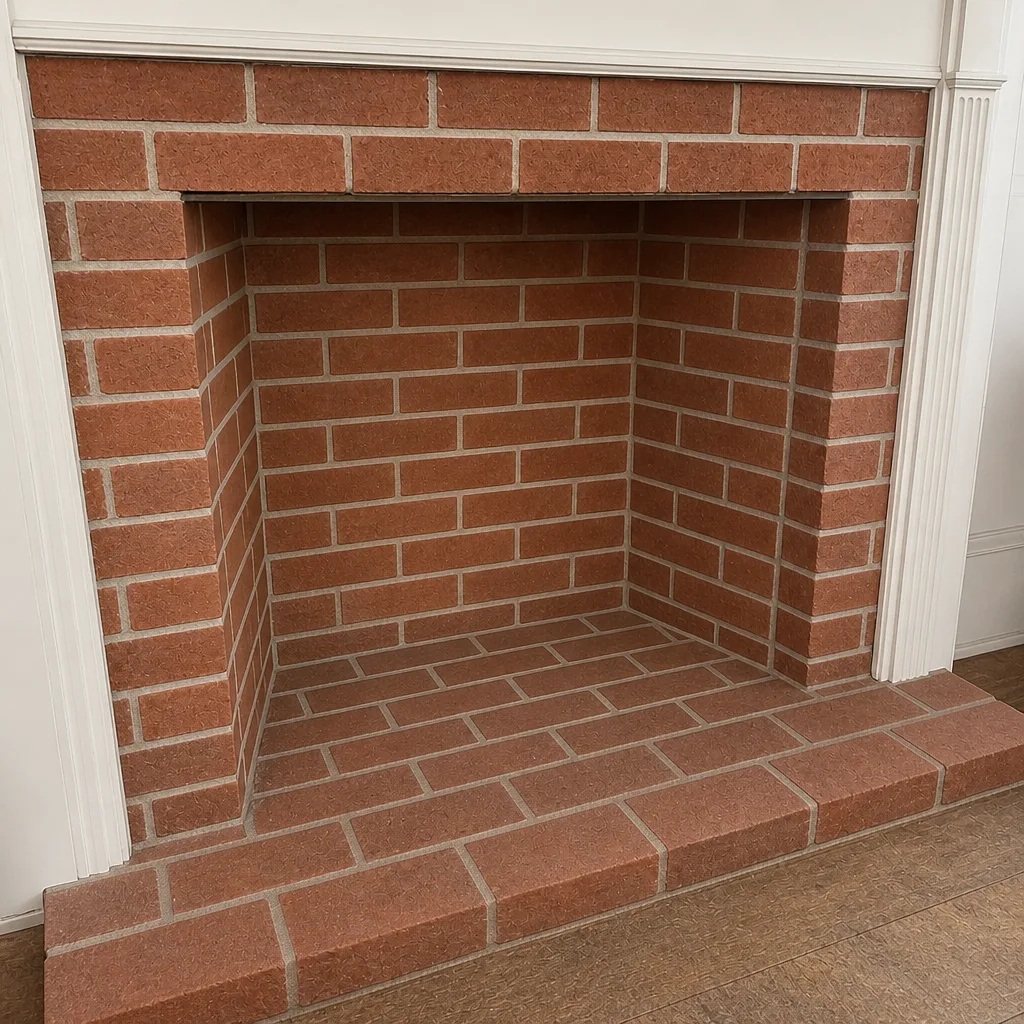 After
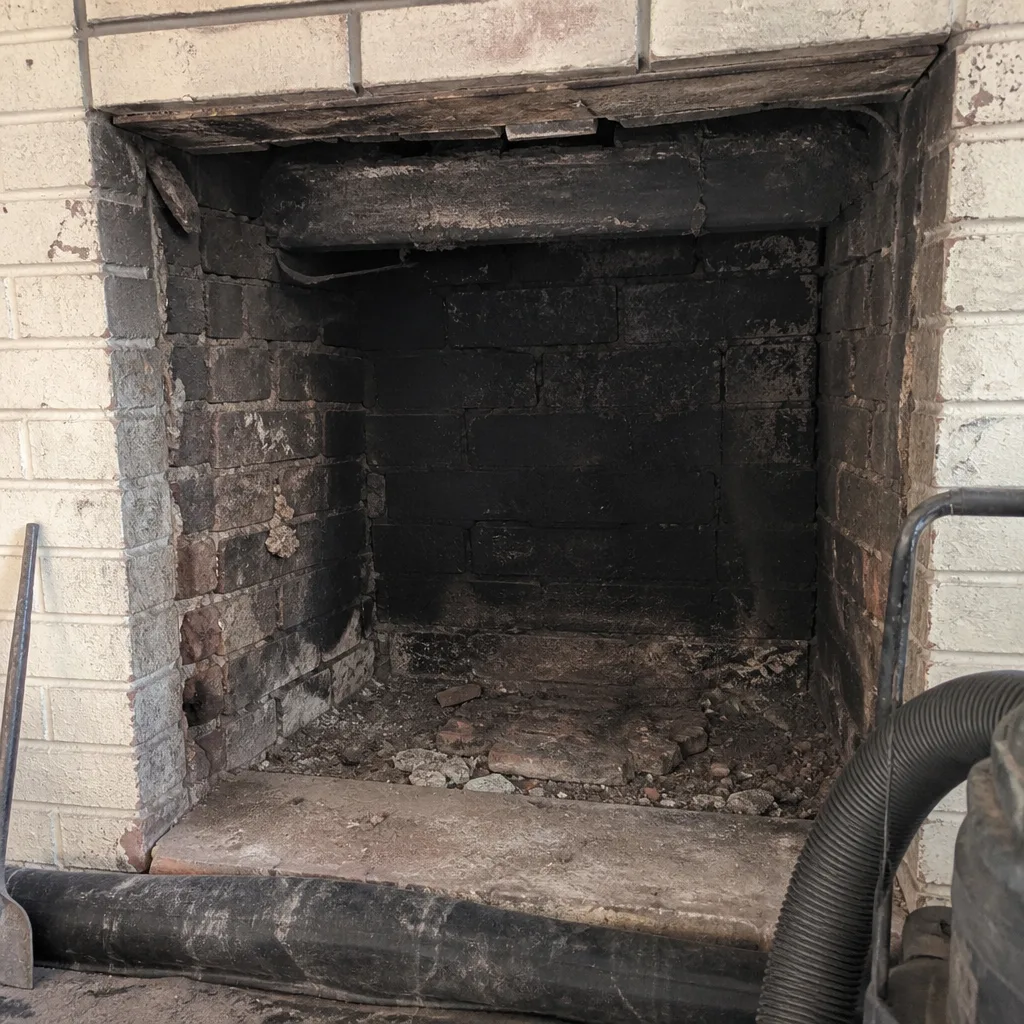 Before
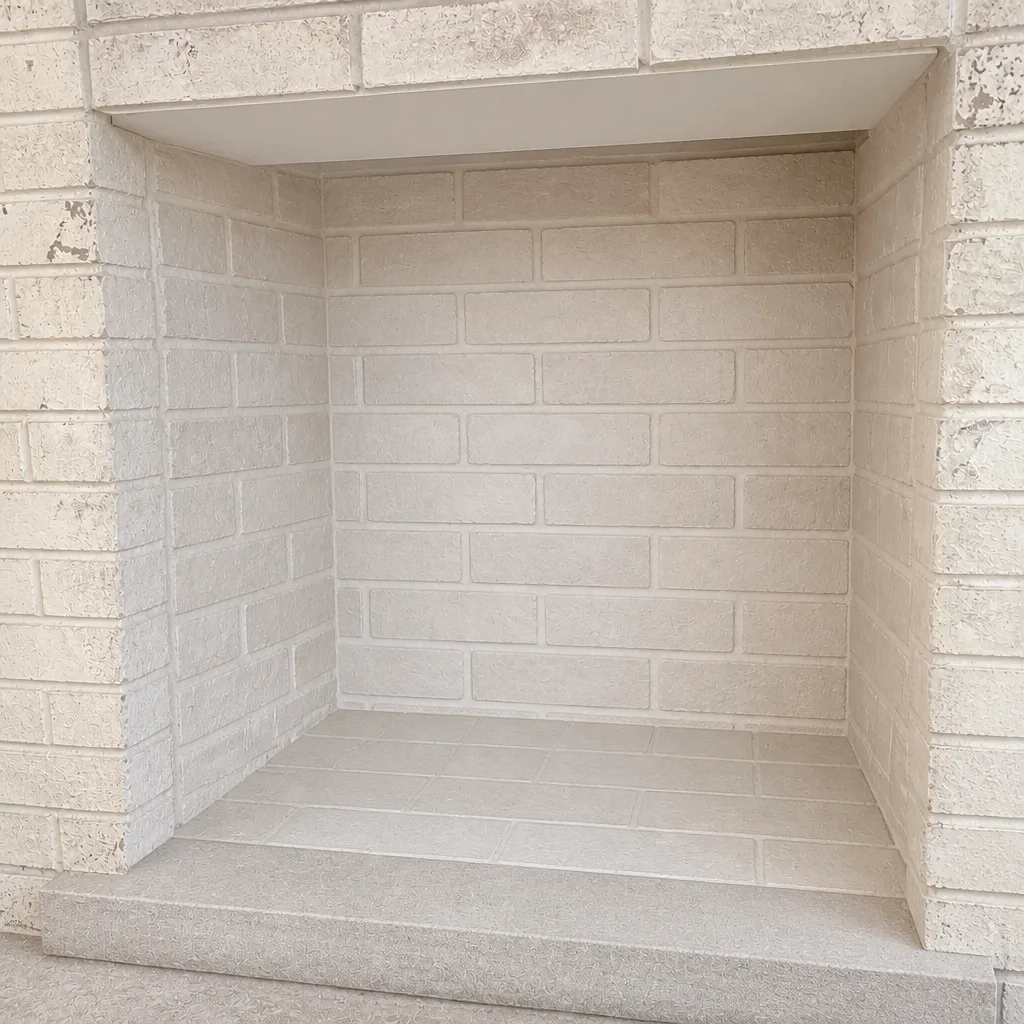 After
Common Mistakes to Avoid
- Booking on price alone. The lowest quote and the highest quote rarely cover the same work. Ask what each includes before you compare the numbers.
- Skipping the written report. A sweep without documentation leaves you with no record of liner condition. If the liner fails later, you’ll wish you had the baseline.
- Accepting a liner replacement without seeing the camera video. A camera inspection shows the inside of the flue. Ask to see it. If the technician won’t share it, that’s your answer.
- Waterproofing a leaking chimney. Waterproofing seals the masonry surface. It doesn’t stop an active leak. Find and fix the source first, then waterproof sound masonry.
- Assuming one flue means one price. Tacony row homes frequently have multiple flues in one stack. Confirm how many are being cleaned before booking.
- Ignoring the cap and crown. A missing cap or cracked crown lets water into the chimney, and water damage to the masonry is expensive to reverse. It’s cheaper to fix the top than the structure below.
- Waiting until something goes wrong. Deferring a sweep converts an annual maintenance cost into a repair bill. The creosote doesn’t need your permission to keep building up.
When to Call a Professional
Some chimney work is genuinely a professional job, not a weekend project. Call a specialist if you smell smoke in the house when the fireplace is lit, if you see creosote glazing on the flue walls, if the damper doesn’t open smoothly, or if you’ve had a chimney fire. Call if you see cracked or missing mortar on the chimney exterior, white staining on the brick, or a damaged crown. Call if the liner type is unknown and you’re planning to use the fireplace, or if you’re buying a Tacony home and want the chimney’s condition documented. And call if it’s simply been more than a year since the last cleaning. Chimney Sweep Tacony offers free estimates in Tacony. Call (833) 370-3312. We answer 24/7. Fast dispatch from 7am to 7pm, Sunday through Friday.
Frequently Asked Questions
A standard chimney sweep with a Level 1 inspection in Tacony typically costs $200 – $275 in 2026, including cleaning of one flue, a written inspection report, and disposal. Additional flues on the same chimney usually run $75 – $125 each. Call (833) 370-3312 for an exact quote, and the written estimate sets the final price.
Not without seeing the camera video of the flue interior. A liner replacement is only justified when the inspection shows cracks, gaps, or damage that a repair can’t address. Ask to see the video, ask whether HeatShield resurfacing is an option before full replacement, and ask whether the work can safely wait. If the technician can’t show you the evidence, get a second opinion.
Once a year for a wood-burning fireplace in regular use is the standard interval, and it’s the cheapest way to stay ahead of creosote buildup. If you burn wood heavily through the winter or burn unseasoned wood, don’t stretch the interval. A yearly visual check is the baseline even for occasional use. Call (833) 370-3312 to book a sweep.
Creosote builds up on the flue walls stage by stage. Stage 1 brushes off easily; Stage 2 is tar-like and may need chemical treatment; Stage 3 is glazed and highly combustible, and a fire at that stage can damage the liner and the chimney structure. The deferred sweep doesn’t save money. It turns a $200 – $275 maintenance cost into a repair bill. Call (833) 370-3312 for a free estimate.
Yes, especially on a Tacony row home with an older clay liner. The written report gives you a record of the liner’s condition at the time of the sweep. That record matters when you sell the house, file an insurance claim, or make a repair decision a few years down the line. Without it, you have no baseline. Call (833) 370-3312 to book a documented sweep.
A Level 1 inspection during a routine sweep covers all accessible parts of the chimney and venting, which catches most common issues. A Level 2 camera inspection goes further into the flue and is warranted after a chimney fire, a change to the system, or when the Level 1 turns up something worth a closer look. If your technician recommends the camera, ask why. Call (833) 370-3312 for a free estimate.
The Bottom Line
The cost of a chimney cleaning in Tacony in 2026 isn’t a single number; it’s a scope. A documented sweep with a written Level 1 inspection runs $200 – $275, and that’s the honest baseline. Add-ons like a camera inspection, waterproofing, or smoke chamber work are legitimate when the technician can show you the evidence and tell you what can safely wait. Compare bids by scope, not by bottom line. Ask for the written report, ask how many flues the price covers, and ask to see the camera video before agreeing to any repair. A low quote isn’t automatically a bad one, but it’s always a signal to ask what’s been left out. For a free estimate on a sweep or repair, call (833) 370-3312.
Written by the team at Chimney Sweep Tacony.