
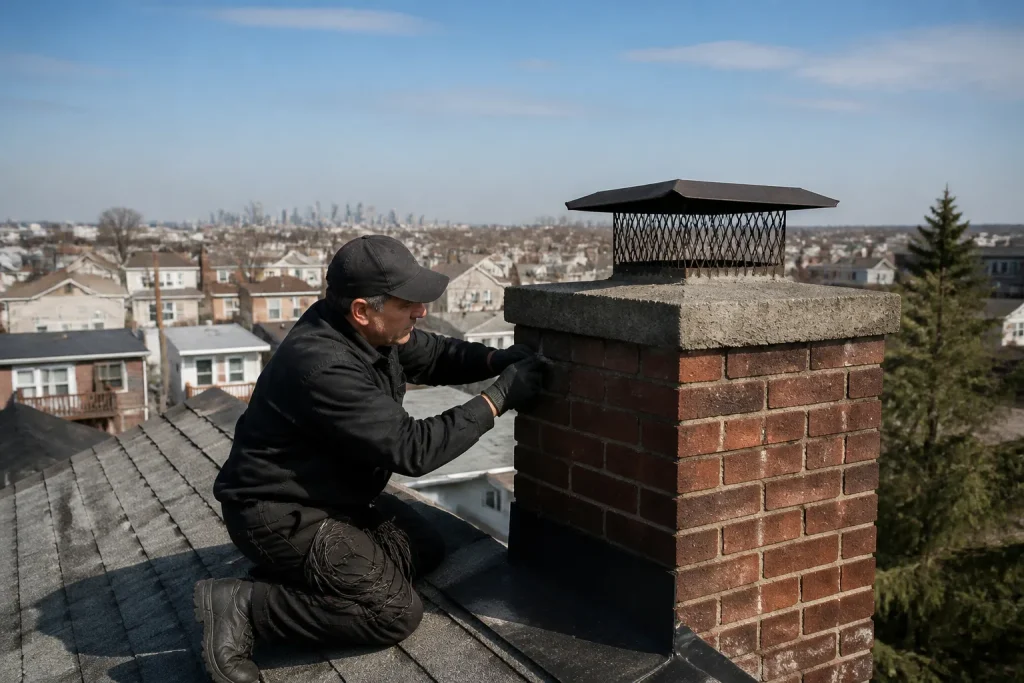
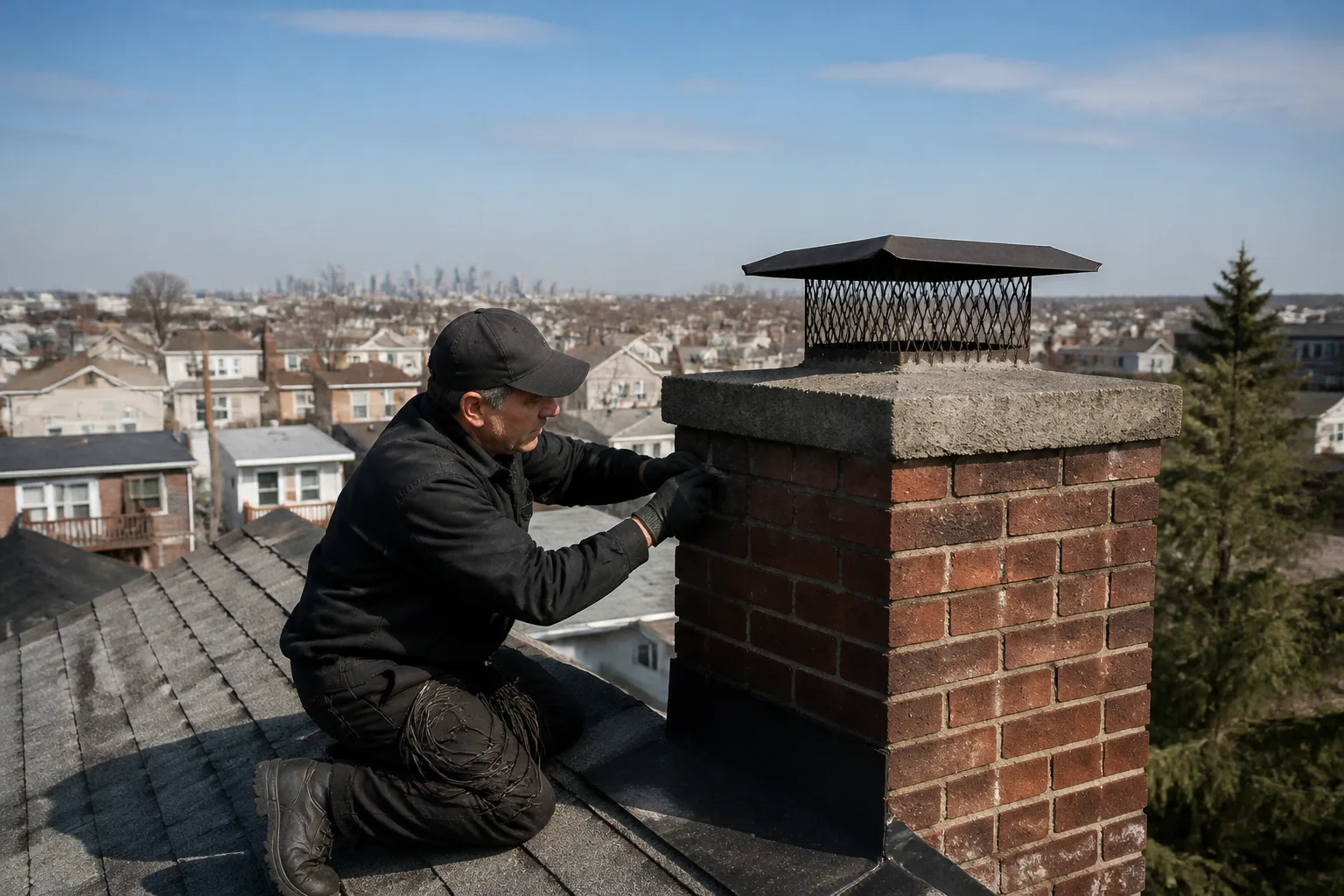
Chimney Sweep: Repair or Replace? How Tacony Homeowners Decide
Most homeowners here ask the wrong question first. They ask “is it broken?” when what matters is “how much of it is still sound?” A Tacony chimney that looks rough from the street can need nothing more than a stainless liner and a new crown, while one that looks fine can have a failed offset hidden inside the chase. The repair-or-replace decision comes down to four independent checks: liner condition, masonry structure, smoke chamber and firebox, cap and crown. Each gets scored on its own. You replace only the parts that fail. If you’d rather not climb up there and guess, call (833) 370-3312.
First, understand what “replace” actually means
Here’s the thing that throws people: “replace” almost never means tearing the chimney down. In Tacony’s rowhouses, a full rebuild is the rare, expensive answer. Most flue problems get solved by installing a stainless liner inside the existing chase, which keeps the masonry shell and gives you a new, sealed flue path in one move.
That’s why the word “replace” gets people nervous before they even know the scope. Let’s separate the options:
- Full rebuild: the masonry is torn out and rebuilt from the roofline or below. This is the $8,000 to $15,000 scenario, and it’s reserved for structural failure.
- Stainless liner installation: a flexible or rigid liner runs inside the existing flue. This is the standard modern fix for a cracked or unlined flue. We install DuraFlex flexible systems where a rigid liner won’t fit the older, non-standard chases common here.
- HeatShield resurfacing: a professional-grade liner resurfacing that repairs the inside face of a clay flue without a full reline. This can solve a real problem for under $2,000 where the flue is otherwise structurally sound.
- Surface repair: new crown, cap, mortar repointing, spalled brick replacement. These keep the water out and the structure alive.
So when someone tells you your chimney needs “replacing,” ask which of these four they mean.
The four-part assessment: what a Level II inspection actually checks
A NFPA 211 Level II inspection is the real decision document. Not a clipboard with checkmarks and a price, but a photo or camera record of what the inside of your chimney looks like, room by room. Here’s how a specialist scores each part.
1. Liner condition. Is it clay tile, cast-in-place, or already stainless? Clay tiles crack at the joints; cast-in-place can spall; stainless can be sound for decades. A single flue with cracked tiles and gaps in the mortar can usually be relined. A flue that’s never had a liner at all, in a house old enough to predate them, needs one.
2. Masonry structural integrity. Look for leaning, cracked mortar joints, and spalled brick at the roofline – damaged faces where water got in and froze. A chimney that’s still plumb with solid joints is a repair candidate. One that’s leaning out from the house is not.
3. Smoke chamber and firebox condition. This is where Tacony fireplaces usually hide their worst surprises. Corroded dampers, fractured firebox panels, and smoke chambers with rough, unbonded mortar are all repairable, but they change the scope. We handle firebox and smoke chamber work alongside the flue so you’re not hiring a second contractor when the problem crosses the line.
4. Cap and crown status. A cracked crown is the front door water uses to get into the masonry. A missing or rusted chimney cap lets rain and animals straight into the flue. Both are comparatively cheap fixes that prevent expensive ones. If you’ve skipped chimney cap & crown work for a few seasons, that’s usually the first place the money should go.
Cost ranges in Tacony, so you can sanity-check any quote
You should know roughly what these scopes cost before anyone hands you a number. Here’s what typical jobs run in the Tacony area, keeping in mind older rowhouse chases sometimes add complexity:
- Stainless liner installation: roughly $2,500 to $5,500 depending on height and flue configuration.
- HeatShield resurfacing: roughly $1,500 to $2,000 for a flue that qualifies.
- Partial masonry repair (spalled brick, repointing, crown rebuild): roughly $800 to $3,000.
- Full chimney rebuild: roughly $8,000 to $15,000.
Those are estimates, not quotes. The written estimate sets the final price, and we don’t proceed until you’ve seen the camera footage and understand what it shows. If a quote for a full rebuild shows up before anyone has looked up your flue with a camera, slow down. The gap between a $2,000 resurfacing and a $12,000 rebuild is exactly the gap between a sound shell and a failed one – and you deserve to see the evidence for which side you’re on.
When repair is the wrong answer
We prefer repair whenever it’s honest. There are times it isn’t. If you see any of these, surface patching won’t fix what’s underneath:
- The chimney is leaning. A chimney that’s pulled away from the house has foundation or structural movement. No crown, cap, or liner fixes that.
- Brick faces are spalling badly at the roofline. Where the freeze-thaw cycle keeps peeling the brick faces off, the masonry is losing mass faster than it can be patched.
- The flue offset has failed. Offsets are the angled sections where the flue jogs inside the chase. When they fail, a straight liner may not be installable without structural work first.
- Multiple flues are compromised in the same chimney. One bad flue is a repair. Three bad flues in one stack usually means the structure itself is the problem.
In those cases, a rebuild is the answer, and no amount of resurfacing will hold. The good news is that this is the minority of Tacony chimneys we assess. The rest fall into the repair column – and knowing that up front is worth the inspection alone.
Using the inspection report the right way
Here’s the part most homeowners miss. The Level II inspection report isn’t just a sales document. It’s your decision worksheet. Read it like one:
- Does it show photos or camera video of each defect? If it doesn’t, ask for them before you agree to anything.
- Does it separate the defects by category? A good report tells you which issue is in the liner, which is in the masonry, which is in the firebox, and which is just weatherproofing.
- Does it tell you what can safely wait? Not everything that comes up in an inspection is urgent. If the report doesn’t say what’s seasonal and what’s “call us before next burning season,” it’s not finished.
- Does it explain the options? For a flue that qualifies for HeatShield, that conversation should happen before a full reline gets recommended, and vice versa. If only one option appears on the page, ask why.
This is where our approach matters. From annual sweep to full liner rebuild, we diagnose the system rather than just clean the flue, and the rec
Need Chimney Cleaning Help?
Call Chimney Sweep Tacony - the local pro we connect you with is licensed and insured, here with fast help in Tacony.
(833) 370-3312